Key takeaways
- Approve at least two identical samples: one for you and one sealed at the factory for production and inspection.
- A golden sample sets the target; limit samples set the edges. Hand-made goods need both.
- Agree the light and viewing conditions for colour checks, because a match in one light can fail in another.
- Without an approved sample at the factory, finish and colour can only be judged against a written description.
Types of reference sample
Buyers and factories use several names for reference samples. The terms vary between companies, so define the ones you use in your purchase order.
| Sample | What it is | Used for |
|---|---|---|
| Golden or approved sample | The unit the buyer approves as the standard, signed and sealed. | The reference for production and every inspection. |
| Pre-production (PP) sample | Made with the actual production materials, trims and process before bulk starts. | Confirming the factory can repeat the approved design at scale. |
| Top-of-production (TOP) sample | Taken from the first units off the production line. | Checking that bulk matches the approved sample early. |
| Limit (boundary) sample | A unit or panel showing the worst still-acceptable condition, sometimes with one just beyond it. | Judging colour, grain, texture or finish variation. |
| Lab dip, strike-off, finish panel | Small colour or print trials on the real fabric, yarn or timber. | Approving colour and finish before a full sample is made. |
From our inspections
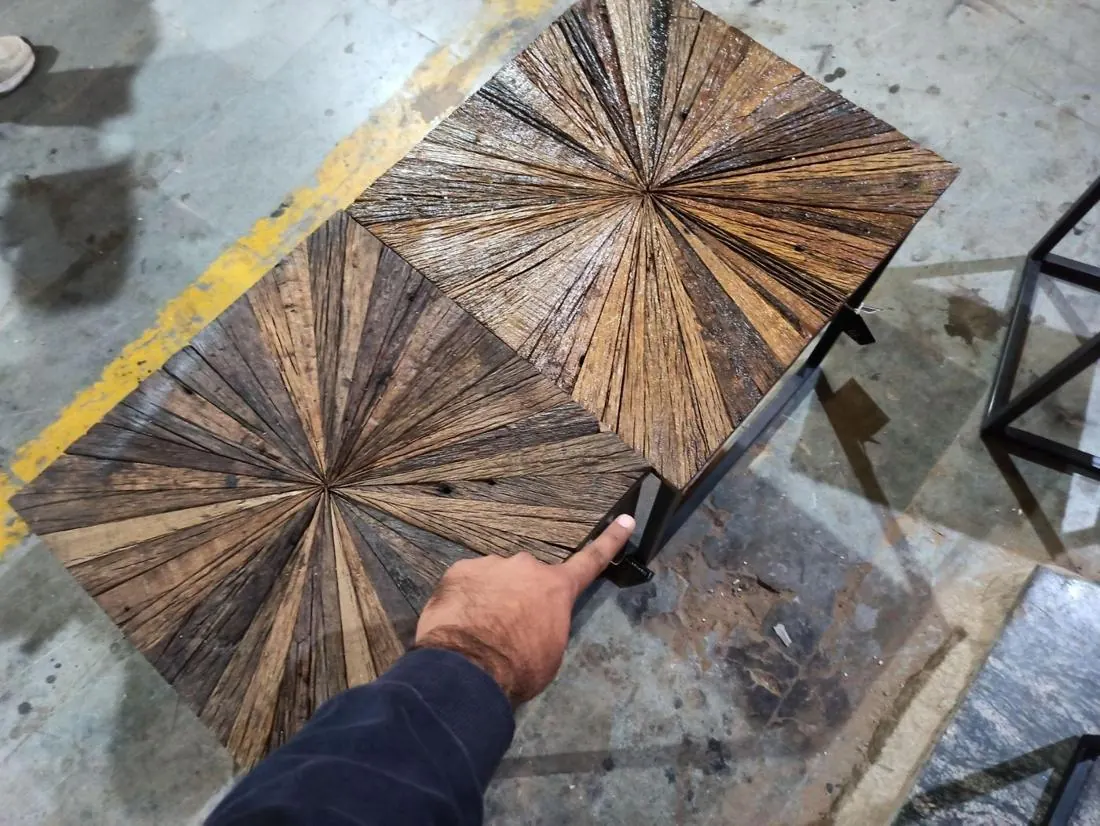
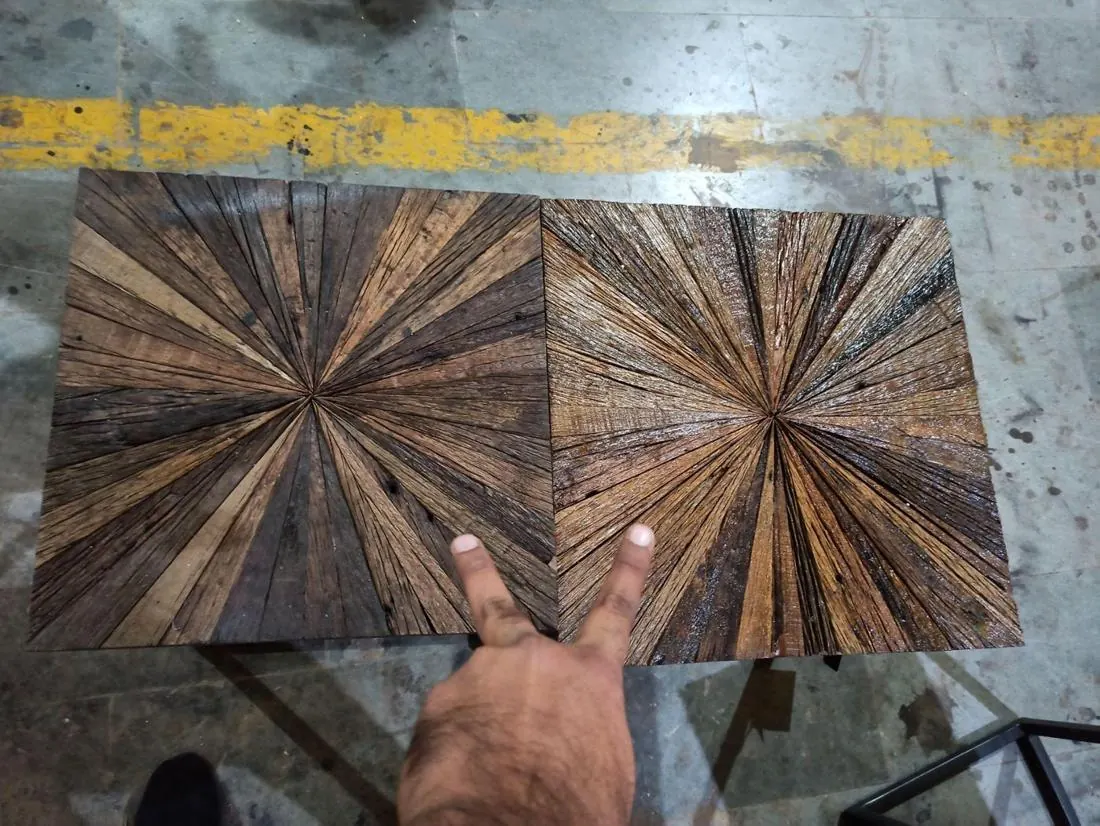
Real photos from our published sample reports, anonymised. Click a source to read the full report.
How to approve and seal a golden sample
A golden sample only works if both sides hold the same thing. Follow these steps:
- Approve in writing. List any changes you want ("approved with comments") and make sure the comments reach the production floor, not just the sales office.
- Make at least two. One stays with you; one stays sealed at the factory. For a long order or several production units, ask for one per unit.
- Label each one. Style number, colour, PO number, approval date and signatures from buyer and factory.
- Seal it. Tamper-evident tags or signed tape across the packaging, so a swapped or altered sample is obvious.
- Record it. Photograph it from fixed angles with a ruler and a colour reference card in the frame, and record its key measurements.
- Store it well. Keep it away from sunlight, heat and damp. Finishes fade and solid wood moves; a sample stored in a sunny showroom no longer shows the approved colour.
- Re-approve when things change. New timber supply, a new dye house or a new finish recipe means a new approval, even on a repeat order.
On a pre-production inspection, the inspector checks that the sealed sample is intact, photographs it and compares the first production units with it.
Natural variation in hand-made goods
Much of what India exports is made by hand or from natural materials. No two units will match exactly, and a checklist written for machine-made goods will fail good lots. Decide in advance what is not a defect:
| Product | Expected variation | How to set the range |
|---|---|---|
| Solid wood furniture | Grain, knots, colour differences between boards of sheesham or mango wood | Light and dark limit panels in the approved finish; a rule on knot size and filling |
| Hand-knotted rugs | Abrash (shade bands from different dye lots of wool), small pattern differences | Photos or a strike-off showing acceptable abrash; size tolerance |
| Handloom and block prints | Slubs, small weave irregularities, print registration | A limit swatch; a shade band for colour |
| Stoneware and terracotta | Glaze pooling, reactive glaze effects, kiln colour shifts | Two or three limit pieces covering the range |
| Brass and copper décor | Hammer marks, antique-finish depth, patina | Light and dark finish limits; photo board |
Write the range into the checklist so the inspector can apply it. See how to write an inspection checklist, and the glossary entries for abrash and shade band.
Checking colour: light, distance and scales
Two pieces can match under factory tube lights and differ in daylight. This effect, called metamerism, is why the viewing conditions belong in the specification. Agree three things:
- The light. Daylight at a window away from direct sun, or a light box with a stated light source. ASTM D1729 is a standard practice for visual appraisal of colours and colour differences of opaque materials under controlled lighting and viewing.
- The distance and angle. For example, at arm's length and straight on, with the sample and the production piece side by side.
- The tolerance. For textiles, the grey scale for change in colour (ISO 105-A02) rates a difference on a five-step scale, with half steps. Some buyers use it to state how close bulk must be to the standard; if you do, give the grade in your specification.
Colour differences between cartons or batches are as important as the match with the sample. An inspector opens cartons from across the lot to see both.
How inspectors use reference samples
At every stage the inspector compares production with the sealed sample: materials and first units at pre-production, work in progress at a during-production inspection, and the random sample from packed cartons at a pre-shipment inspection. Photos show both side by side.
Our real reports show what happens without one. In Sample 01 no approved sealed sample was available, so finish and colour conformity could not be verified. In Sample 02 approved samples were missing for some styles, so finish was judged against the PO description. And in Sample 05 nesting tables of one style came in two size variants, the kind of drift a sealed sample and stated dimensions are meant to prevent.
In a Clear To Load report, a colour or finish difference from the approved sample is issued as Hold when the AQL results are otherwise within limits, so you decide whether the goods ship.
Common golden-sample problems
- The only approved sample is in the buyer's office abroad, not at the factory.
- The sample was made by the best craftsman with selected material, and bulk cannot repeat it.
- Several versions were "approved" by email and nobody knows which is final.
- Approval comments never reached the production floor.
- One sample covers several colourways or sizes.
- The sample has faded, been used for photography or lost its seal.
Each of these turns a clear inspection result into an argument. Fix them before production, not at the final inspection.
Sources
- ASTM D1729-22, Standard Practice for Visual Appraisal of Colors and Color Differences of Diffusely-Illuminated Opaque Materials (ASTM)
- ISO 105-A02:1993, Textiles — Tests for colour fastness — Part A02: Grey scale for assessing change in colour (iso.org)
- Clear To Load sample inspection reports (six anonymised furniture inspections, 2022–2023)