Key takeaways
- Inspect during production to catch problems you can still fix, and before shipment to decide whether the lot ships.
- Write tolerances, finish standards and packing rules into the specification. An inspector cannot judge against a standard nobody set.
- The sample is drawn at random from packed cartons, sized by ISO 2859-1 for your lot size and AQL.
- Cracks, visible filler, size variation and tip-over are the findings that most often stop a furniture lot in our real sample reports.
- A tip-over hazard is a critical defect. One critical finding fails the lot on its own.
When to inspect: during production or before shipment
Most furniture orders need one inspection before shipment. Larger or new orders benefit from a second, earlier visit.
| Inspection | When | What it is for |
|---|---|---|
| Pre-production | Before cutting starts | Check timber, panels, hardware and the approved sample, so the factory starts right. |
| During production (DUPRO) | About 20 to 60% of units made | Find construction, finish or size problems while there is still time to correct the rest of the run. |
| Pre-shipment (PSI) | Production finished, most cartons packed | Decide whether the lot ships. This is the inspection that ends in a verdict. |
| Container loading | On loading day | Confirm quantity, carton condition, stacking and the container seal. |
Book a DUPRO for a first order with a new factory, for styles with a known problem (cracked tops, finish variation) or when the ship date leaves no time to remake goods after a failed final inspection.
From our inspections
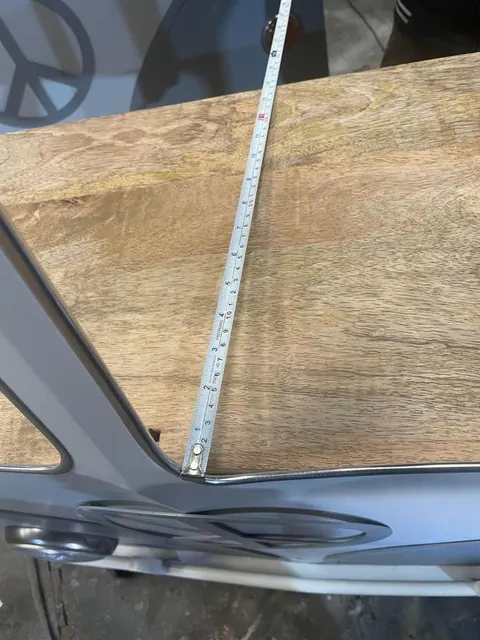
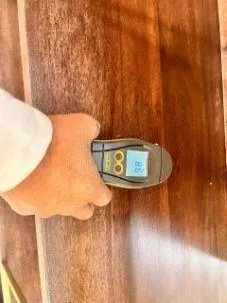
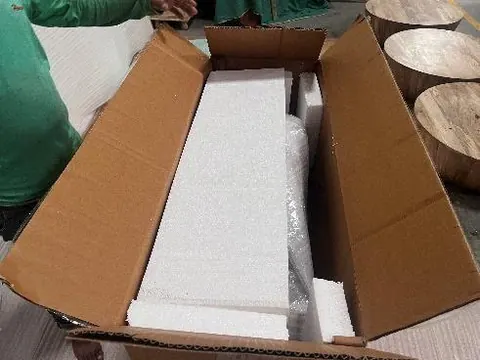
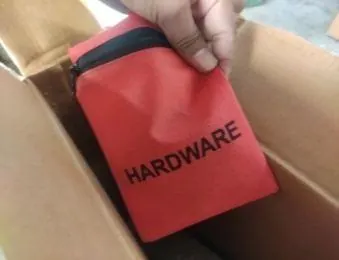
Real photos from our published sample reports, anonymised. Click a source to read the full report.
Prepare the specification and checklist
An inspection is only as good as the standard it checks against. Send the inspector, before the visit:
- Purchase order and packing list with quantities per style.
- Drawings with dimensions and tolerances, for example ±0.5 cm on length and height.
- An approved sealed sample (golden sample) or photos and finish panels for colour and sheen.
- Moisture content limit for solid wood.
- Packing, carton and shipping-mark specifications, including labels and barcodes.
- Market requirements: tip-over rules for the US, warning labels, and wood-pallet marks.
- Defect classification and AQL: which faults are critical, major or minor.
Our real reports show what happens when these are missing. In Sample 01 (Jodhpur, 181 pieces) the PO gave no dimensional tolerance, so measured deviations of up to +1.5 cm could only be reported, not judged. No sealed sample was available either, so finish conformity could not be checked.
Pull a random sample with AQL
The inspector does not check every piece. The sample size comes from ISO 2859-1, using the lot size, the inspection level (usually general level II) and the AQL for each defect class. A common furniture plan is zero critical defects, AQL 2.5 for major and AQL 4.0 for minor.
Example from Sample 04: 661 pieces across 16 styles gives code letter J and a sample of 80. At AQL 2.5 the lot accepts up to 5 major defects and rejects at 6. The inspector found 8, so the lot was Not cleared.
Cartons are chosen by the inspector at random from across the lot, not set aside by the factory. Use the AQL calculator for your own numbers, or read AQL sampling explained.
The ten checks, step by step
An inspector carries a tape measure, a calibrated moisture meter, a weighing scale, a barcode scanner and a camera. On each sampled piece the checks run in this order:
- Quantity and packing status. Count cartons against the PO and packing list. If most of the order is not packed, the result is limited.
- Dimensions. Measure length, width and height of every style against the drawing and its tolerance. Weigh the product and the carton.
- Construction and joinery. Check joints for gaps and glue lines, look for cracks in solid wood, marble and frames, and check that crack filling is sound and not visible.
- Moisture content. Take meter readings on several points of each solid-wood style. Wood that is too wet shrinks and cracks after it arrives in a heated home.
- Finish and workmanship. Compare colour and sheen with the sealed sample. Look for scratches, sanding or grinding marks, paint runs and exposed nails.
- Function and assembly. Open every drawer and door, check runners and hinges, and assemble the product from the carton using the supplied instructions. Test any lighting or electrics.
- Hardware. Check the fittings bag against the bill of materials. A missing bolt is a customer complaint.
- Stability and tip-over. Check that tables and cabinets sit level and do not rock. For clothing storage units sold in the US, open drawers and check for forward tipping; see the STURDY Act and ASTM F2057 guide. An on-site check is a screen, not a substitute for a lab test.
- Labels and markings. Check product labels, warning labels, carton marks and barcodes against the specification, and scan the barcodes.
- Packaging and carton drop test. Check inner protection, corners and carton strength. Many checklists drop a packed carton on one corner, three edges and six faces, then open it to look for damage. Wooden pallets and crates need the ISPM-15 mark.
Every step is photographed, including passes. On loading day, a loading supervision adds a final count, stacking check and seal record.
Common furniture defects and how they are classed
These findings come from six real inspections in Jodhpur and Jaipur, published as anonymised sample reports.
| Defect | Usual class | Where we found it |
|---|---|---|
| Cabinet tips forward with all drawers open | Critical | Sample 05, five-drawer cabinet, no provision for an anti-tip kit |
| Crack in a solid-wood or marble top | Major | Sample 03 (end crack), Sample 04 (two marble tops to be replaced) |
| Visible epoxy (araldite) filling or poor crack filling | Major | Sample 03; Sample 04, rectified on site |
| Size or colour varies within one style | Major | Sample 05, nesting tables in two size variants |
| Shelf does not sit level | Major | Sample 04, wooden cabinet |
| Faulty light fitting | Major | Sample 06, corrected on every unit |
| Scratches, spots, grinding marks, paint tears | Minor | Sample 01, Sample 02, Sample 04 |
Two patterns stand out. Cracks in solid wood and marble were the main reason lots failed. And defects that were fixed on site still needed a re-check before shipment.
How to read the result
A Clear To Load report ends in one of three verdicts. See the Cleared to load verdict for how they map to pass, pending and fail.
- Cleared to load. Every defect class is within its accept number and the other checks meet the specification. Sample 02 was cleared with two minor finish faults, and touch-up was advised.
- Hold. Issues you need to decide on before the goods ship. In Sample 06 a light fitting was corrected on every unit during the visit, and a re-check was advised.
- Not cleared. A defect class reached its reject number, or there is a critical defect. Sample 05 failed on a single tip-over finding.
After a Not cleared result, agree the rework with the factory in writing, then book a reinspection of the reworked lot before you release payment or the booking.
Furniture inspection checklist
Copy this list into your inspection request or your own visit plan.
Before the visit
- PO, packing list and drawings with tolerances sent
- Sealed sample or finish reference available at the factory
- Moisture limit, AQL levels and defect classes agreed
- Carton, label and shipping-mark specification sent
- Most of the order packed on the inspection date
On site
- Cartons counted against the packing list
- Sample drawn at random by the inspector
- Dimensions and weights recorded per style
- Joints, cracks and filling checked
- Moisture readings taken on solid wood
- Finish compared with the sealed sample
- Drawers, doors and assembly tested
- Hardware bag checked against the bill of materials
- Stability checked; drawers opened on storage units
- Labels, warning labels and barcodes checked
- Carton drop test done; ISPM-15 mark on wood packaging
- Photos of every check and every finding
Sources
- ISO 2859-1:2026, Sampling procedures for inspection by attributes, Part 1 (iso.org)
- Safety Standard for Clothing Storage Units, 16 CFR 1261, Federal Register, 4 May 2023
- ISPM 15, Regulation of wood packaging material in international trade (IPPC)
- ISTA test procedures for packaged products
- Clear To Load sample inspection reports (six anonymised furniture inspections, 2022–2023)