What is made in Jaipur
Jaipur exports a wider mix of products than most Indian clusters. Furniture and décor factories sit next to printing units, potteries and jewellery workshops, and one buyer often sources several of these from the same city.
| Product | Typical materials | Where it is made |
|---|---|---|
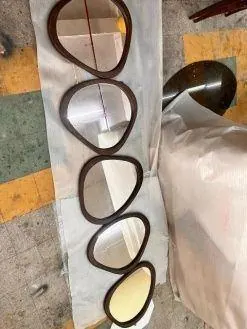
| Furniture and mirrors | Mango, acacia and sheesham wood, iron, glass | Factories in RIICO industrial areas and on the city's outskirts |
| Wood and stone décor | Carved wood, marble, sandstone, bone and resin | Workshops and finishing units across the city |
| Blue pottery | Quartz-based body, cobalt and copper oxide glazes | Small potteries, mostly hand-made |
| Block-printed textiles | Cotton and linen, pigment and natural dyes | Sanganer and printing units around Jaipur |
| Jewellery | Gemstones, silver, gold, brass | Sitapura and city workshops |
From our inspections
Real photos from our published sample reports, anonymised. Click a source to read the full report.

What we check for Jaipur products
Every inspection runs to a checklist agreed before the visit. The core checks for Jaipur's main export products are:
- Furniture and mirrors: quantity and packing status, dimensions against the specification, moisture content of solid wood, joinery and cracks, finish and colour against the approved sample, hardware and assembly, mirror glass edges and backing, stability, carton weight and markings.
- Blue pottery and ceramics: chips, cracks and crazing, glaze runs and pinholes, colour and pattern consistency, flat bases and lids that fit, and protective packing for fragile pieces.
- Block-printed textiles: print registration, shade variation between print batches, dimensions, stitching, stains and dye marks, and care and fibre-content labels.
- Stone and wood décor: cracks, filler, sharp edges, finish, natural variation within the agreed tolerance, and packing that survives a drop test.
Colour fastness, food-contact safety for glazed tableware and gem or precious-metal grading are laboratory tests, not visual checks. We can pull samples and arrange them through lab testing coordination.
Common defects in Jaipur production
Two of our published sample reports come from Jaipur furniture inspections:
- Visible epoxy filling and an end crack in solid-wood table tops. Two of 20 oval dining-table tops failed, and the lot was Not cleared (Sample 03, January 2023).
- Paint tears, improper finish and size deviations on cabinets and mirrors. All were minor, so the 300-piece lot was Cleared to load with touch-up advised (Sample 02, December 2022).
Other defects to watch for in Jaipur's product mix:
- Glaze chips, crazing and hairline cracks in blue pottery, often from firing or packing.
- Smudged or misaligned prints and shade differences between dye lots in block-printed fabric.
- Hidden cracks filled with resin in stone and marble décor.
- Damp cartons and mould when goods are stored through the monsoon.
Timing and logistics
Jaipur is about 280 km from Delhi by road and has an international airport. Inland container depots serve the city, and most export containers move by rail to the west-coast ports such as Mundra and Nhava Sheva. Many furniture exporters stuff containers at the factory, which is when container loading supervision is useful.
- Festivals: many units slow down or close for several days around Diwali (October or November) and for Holi (March). Plan ready dates and inspections around them.
- Monsoon: from about July to September, humidity rises. Wood picks up moisture, printed fabric dries slowly and cartons soften in storage. We measure moisture content and check storage before loading.
- Several factories: if your order is split across units in Sitapura and Sanganer, we can often plan them on consecutive days. We confirm the man-days when you book.
How to book an inspection in Jaipur
Send the product, the factory's address and the date the goods will be ready through the booking form for Jaipur. A purchase order, specification and photos of the approved sample help us build the checklist.
Within 24 hours we confirm the inspector, the notice we need, the number of man-days and the price. Pricing is per man-day, with travel set by the city's band; see pricing. You get the report within 24 hours of the inspection, ending in a clear verdict: Cleared to load, Hold or Not cleared.