Mango wood: properties and supply
Mango wood is Mangifera indica, the fruit tree. The Wood Database describes the heartwood as golden brown, sometimes with yellow, pink or black streaks, with a pale sapwood that is not always clearly marked off. It weighs about 675 kg/m³ dried, and its listed shrinkage is 3.6% radial and 5.5% tangential. The same source rates it moderately durable to perishable, susceptible to fungal and insect attack, prone to tear-out where the grain is interlocked, and high in silica, which blunts tools.
In practice that means mango is easy to stain and finish but unforgiving in the first weeks after felling. Wet logs and planks left in the yard stain and attract borers. Factories therefore depend on fast sawing, chemical treatment and drying, which are often done by the timber merchant rather than the furniture maker.
Jodhpur's export furniture makers use a lot of mango wood, but the trees grow elsewhere. In January 2022 the trade journal Ply Reporter reported that Jodhpur exporters were receiving complaints about insects in mango wood from foreign buyers. The exporters' association linked the problem to timber from West Bengal, which it said was cheaper than wood from Uttar Pradesh and Gujarat, and to some traders not treating the wood properly. The lesson for buyers: ask where the logs came from and who treated them.
From our inspections
Real photos from our published sample reports, anonymised. Click a source to read the full report.
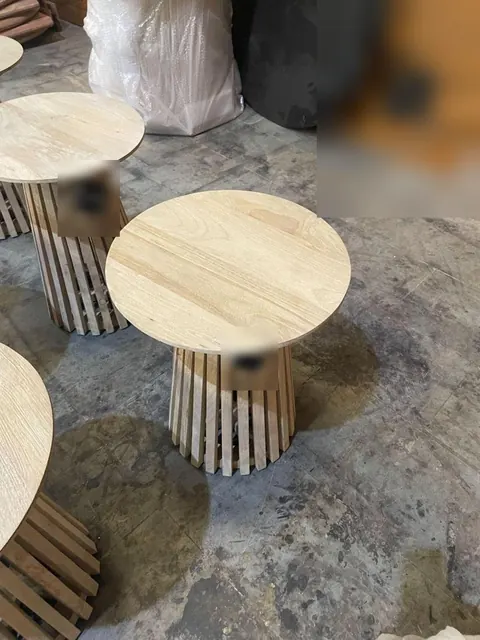
What we check on mango wood furniture
| Check | How it is checked | What fails |
|---|---|---|
| Insect damage | Undersides, backs, end grain and joints checked for pinholes and fine powder; cartons in storage checked for powder on the floor below | Any borer holes; fresh frass is reported on the day |
| Fungal stain and decay | Unfinished faces and end grain checked for grey, blue-black or brown streaks; soft spots probed with a blade | Stain on show faces outside the approved look; any soft or decayed wood |
| Treatment records | Chemical, method and date of treatment from the timber supplier or factory, matched to the timber lots | No record, or a chemical that is not allowed in your market |
| Moisture content | Pin meter, species setting for mango, readings on tops, legs and drawer sides | Readings above the buyer's limit (default 11%) |
| Surface quality | Finished faces checked in raking light and by hand for torn, raised or fuzzy grain | Rough patches that show through the finish |
| Colour across the lot | Pieces of each finish (natural, brown, black) lined up against the approved sample | Visible variation within a style or set |
Common mango wood defects
Our Sample 05 is a real inspection of mango and reclaimed-wood furniture in Jodhpur (January 2023, 465 pieces). The mango side tables in natural, brown and black finishes passed. The findings that failed the lot were elsewhere: colour finish varying across a set of nesting tables (major), two size variants in the same set (major), chipping on a wooden frame (minor, rectified on site) and a five-drawer cabinet that tipped forward with the drawers open (critical).
| Defect | Typical class | Note |
|---|---|---|
| Live borer activity (fresh frass) | Critical or major, per the buyer's list | Can infest other goods and the buyer's premises |
| Old borer holes, no activity | Major on show faces | Unless the specification accepts them as a rustic feature |
| Decay (soft wood) | Major or critical in load-bearing parts | Weakens legs and rails |
| Fungal stain on show faces | Major or minor | Some buyers accept spalted figure; agree it in advance |
| Colour variation within a set | Major | As found on the nesting tables in Sample 05 |
| Torn or fuzzy grain under the finish | Minor | From interlocked grain and blunt tools |
| Mould spots on finished goods | Major | From packing damp pieces in plastic, especially in the monsoon |
Market rules for mango wood furniture
- European Union, treated wood. Under the Biocidal Products Regulation, (EU) 528/2012, a treated article may only be placed on the EU market if the active substances it was treated with are approved in the EU for that use, and labelling rules apply. If the timber was dipped or sprayed against insects or fungi, ask for the product name and active substance.
- European Union, EUDR. Mango trees come from orchards and farms in several states. Each plot needs a geolocation, which is hard when logs pass through merchants.
- United States, Lacey Act. Declare Mangifera indica and the country of harvest, plus any other wood in the piece.
- Finishes. Stains and lacquers fall under EU REACH and Proposition 65.
- Storage units. Mango chests and cabinets for the US fall under the STURDY Act; Sample 05 shows why tip-over matters.
Packing, transit and loading
Mango furniture is often packed soon after finishing to meet a vessel. If the wood or finish still holds moisture, sealed plastic and a warm container are ideal for mould. We check that the finish is dry, that pieces are not wrapped while warm or damp, and that silica gel or other desiccants are in the carton if the buyer specifies them. Insect-damaged pieces should be removed before packing, not after; once cartons are closed, frass is hard to see. Wood pallets and crates need the ISPM 15 mark.
What to put in your mango wood purchase order
- Species: Mangifera indica for every solid part, and any other wood or panel allowed.
- Treatment: the anti-insect and anti-fungal treatment required, with records per timber lot.
- Look: whether spalted or streaked boards are accepted on show faces, with photos.
- Moisture target and limit for your climate; our default limit is 11%.
- Colour range per finish, with sealed light and dark limit samples.
- Packing: when finishing must end before packing, and desiccant if required.
Book an inspection in Jodhpur or at any other factory in India. See also solid wood furniture for checks common to all timbers.