How coffee tables are made for export in India
A coffee table looks simple, but it is often three products from three workshops. The wooden top or frame comes from the furniture factory. An iron base is welded and powder-coated in a metal unit. A glass or marble top is cut, edged and, for glass, toughened by a separate processor, then brought in for packing.
That split matters for inspection. The furniture factory may never have checked the glass it packs, and the person who toughened it is not on site. Lift-top and storage coffee tables add a bought-in mechanism, usually a pair of spring or gas-assisted arms, screwed into the carcass by the factory's own fitters.
Low tables also have large visible surfaces. Every scratch on a 90 cm top is seen from above, from a sofa, in good light. Buyers notice the top far more than the legs.
From our inspections
Real photos from our published sample reports, anonymised. Click a source to read the full report.
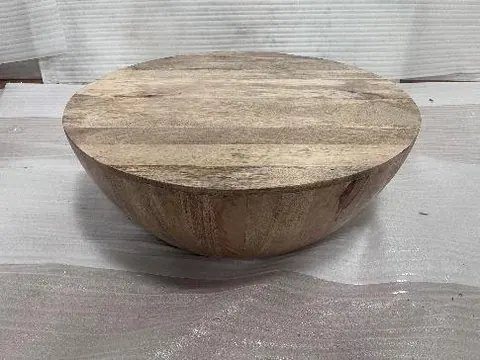
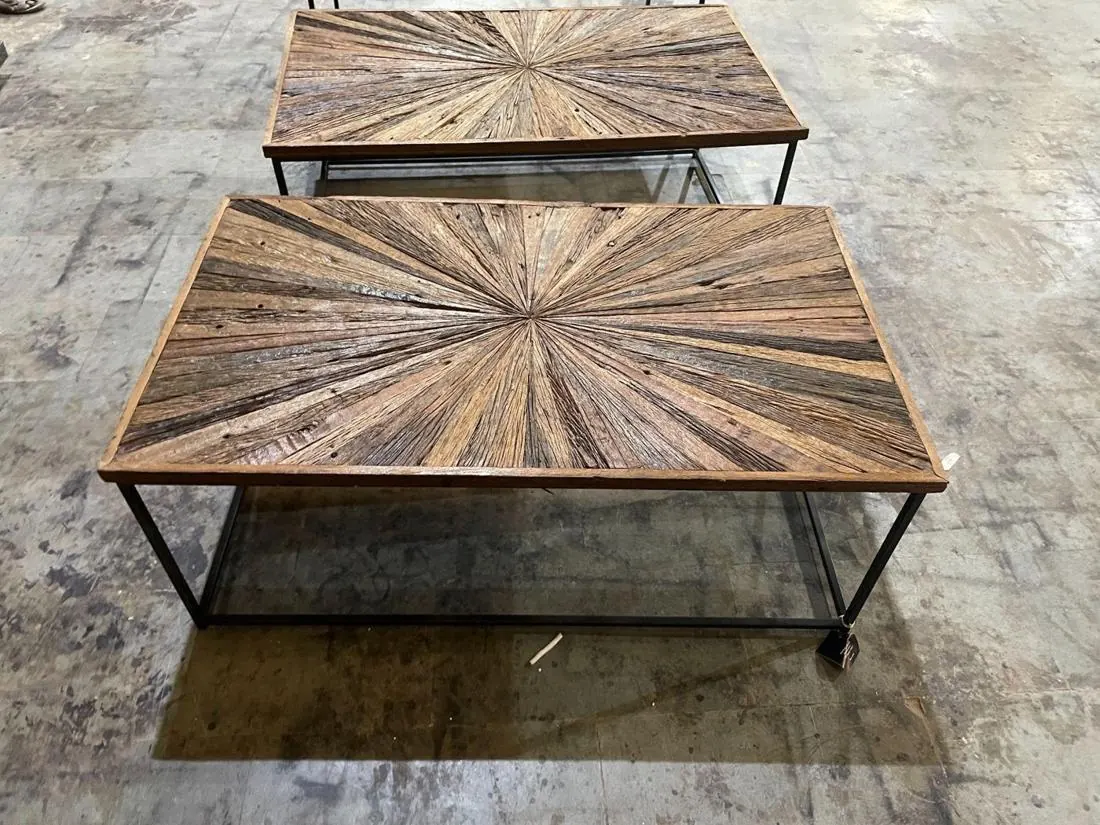
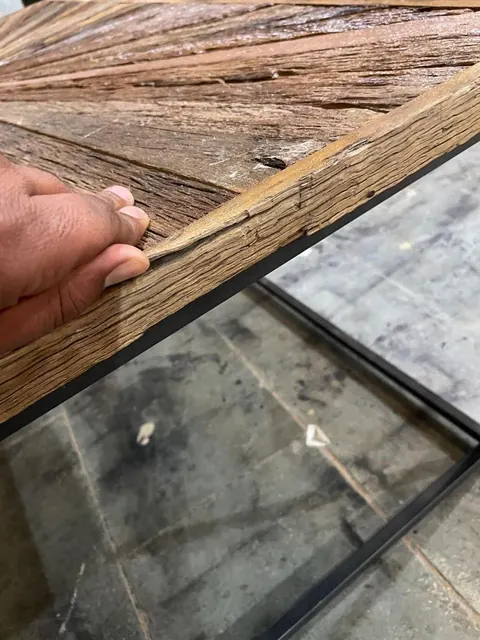
What we check on coffee tables
| Check | How it is checked | What fails |
|---|---|---|
| Height and top size | Tape measure at each corner and the centre, against the PO and its tolerance | Height or length outside the agreed tolerance |
| Glass type and mark | Look for a permanent mark on each panel; compare with the processor's certificate; view under polarised light as a screen | No mark where the spec requires toughened glass; mark does not match the documents |
| Glass edges | Run a gloved hand and eye along every edge and corner | Raw or sharp edges, shells and chips, corner flakes |
| Stone tops | Raking light across the surface, tap test, check the underside and filled veins | Cracks, open veins, resin fill that shows from above |
| Lift-top mechanism | Open and close repeatedly; stop the top at several heights; measure the gap where the top meets the carcass | Top drops or springs up unaided; gap that can trap fingers; loose screws |
| Wobble and level | Assembled on a flat surface, rock each corner; feeler gauge under the feet | Rocks beyond the agreed gap; base and top do not sit square |
| Top fixing | Check that the top sits in its rebate or on its bumpers and cannot slide | Missing pads, glass that moves, screws that pierce the top |
Height deserves a written tolerance. In Sample 01, two solid-wood coffee tables ordered at 30 cm high measured 31 and 31.5 cm. The PO gave no tolerance, so the inspector could only report the deviation, not judge it.
Common coffee table defects and how they are classed
Defect classes are set in your inspection plan. This is the classification we propose when the buyer has none.
| Defect | Typical class | Why |
|---|---|---|
| Cracked glass, or annealed glass where toughened was ordered | Critical | Breaks into large sharp pieces under impact |
| Lift-top that falls shut or snaps open by itself | Critical | Can trap fingers or strike a face |
| Crack in a stone or solid-wood top | Major | Grows in transit and in heated rooms |
| Chipped glass edge or corner | Major | Starting point for breakage; visible to the user |
| Height out of tolerance; wobble | Major | Does not match the listing; feels unstable |
| Chipping on a wooden frame | Minor | Cosmetic, often repairable on site |
| Scratches on an iron base, grinding marks | Minor | Cosmetic; below the main sightline |
Small finish defects can often be fixed during the visit. In Sample 05, chipping on the side frame of a wood and iron coffee table was rectified on site and the style passed after the fix.
Market rules that apply to coffee tables
No market has a law written only for coffee tables. The rules come from the materials and the general safety duty.
- EU. EN 12521:2023 is the requirements standard for domestic tables, including tables with glass, with a finger entrapment test. It is voluntary, but EU buyers write it into specifications to show safety under the General Product Safety Regulation. See EN furniture testing.
- Glass. SATRA notes that EN 15372 treats table glass as safety glass when it meets EN 12150-1, the toughened glass standard, which has its own marking clause. In the US, the safety glazing rule 16 CFR 1201 lists doors, shower and bath enclosures and patio doors, not furniture, so the glass requirement must come from your specification.
- Coatings. US lead-in-paint limits (16 CFR 1303) and California Prop 65; EU REACH.
- Panels and wood. MDF or plywood shelves need TSCA Title VI labels for the US. Solid wood falls under the Lacey Act and the EUDR.
Packing, transit and loading risks
Glass and stone tops cause most coffee table claims. We check that a glass top travels in its own carton or a separate compartment, with corner guards and a rigid board on both faces, never loose against a metal base. Marble needs a crate or heavy honeycomb board and must stand on edge, not lie flat under other cartons. Legs that unbolt should be off and wrapped, with the bolts in a sealed, labelled bag. A carton drop test on a glass-top table is worth the time. Then the glass is unpacked and checked edge by edge.
What to put in your coffee table purchase order
- Height and top size with a tolerance, for example ±5 mm, as you decide.
- Glass: type (toughened), thickness, edge finish, and a permanent mark on each panel.
- Stone: which veins and fills are acceptable, with photos of a reference top.
- Lift-top: the mechanism model, that it holds at any height, and a maximum finger gap.
- Packing: separate glass carton, corner guards, and whether legs ship detached.
Then book an inspection once 80% or more of the order is packed.