How side tables are made and ordered
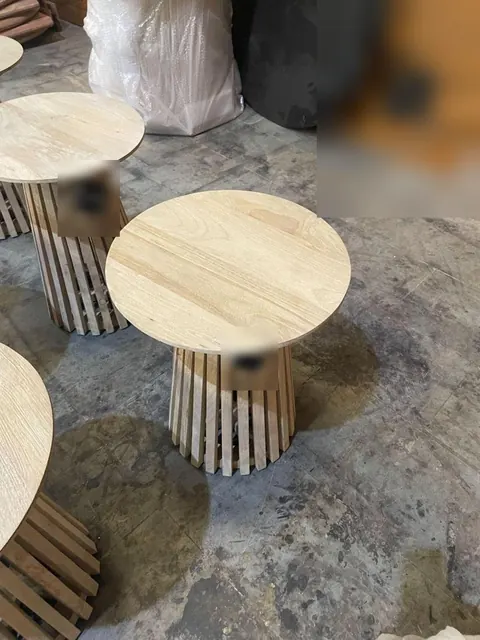
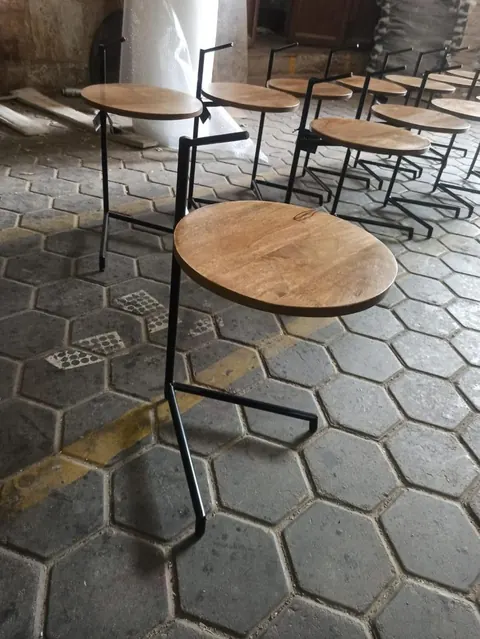
Side tables are small, so factories make them in volume and buyers order them as a matrix: one design in three sizes and three finishes, or a nesting set of two or three. Turned or block legs, drum bodies carved from one log section, and tray tops on iron stands are all common in Jodhpur and Jaipur.
The matrix is where things go wrong. Each variant has its own SKU, colour and carton mark, but the pieces are made side by side on the same floor by the same team. A table finished in the wrong colour, or a medium top packed on a small base, is easy to miss in the factory and hard to fix once it reaches a warehouse.
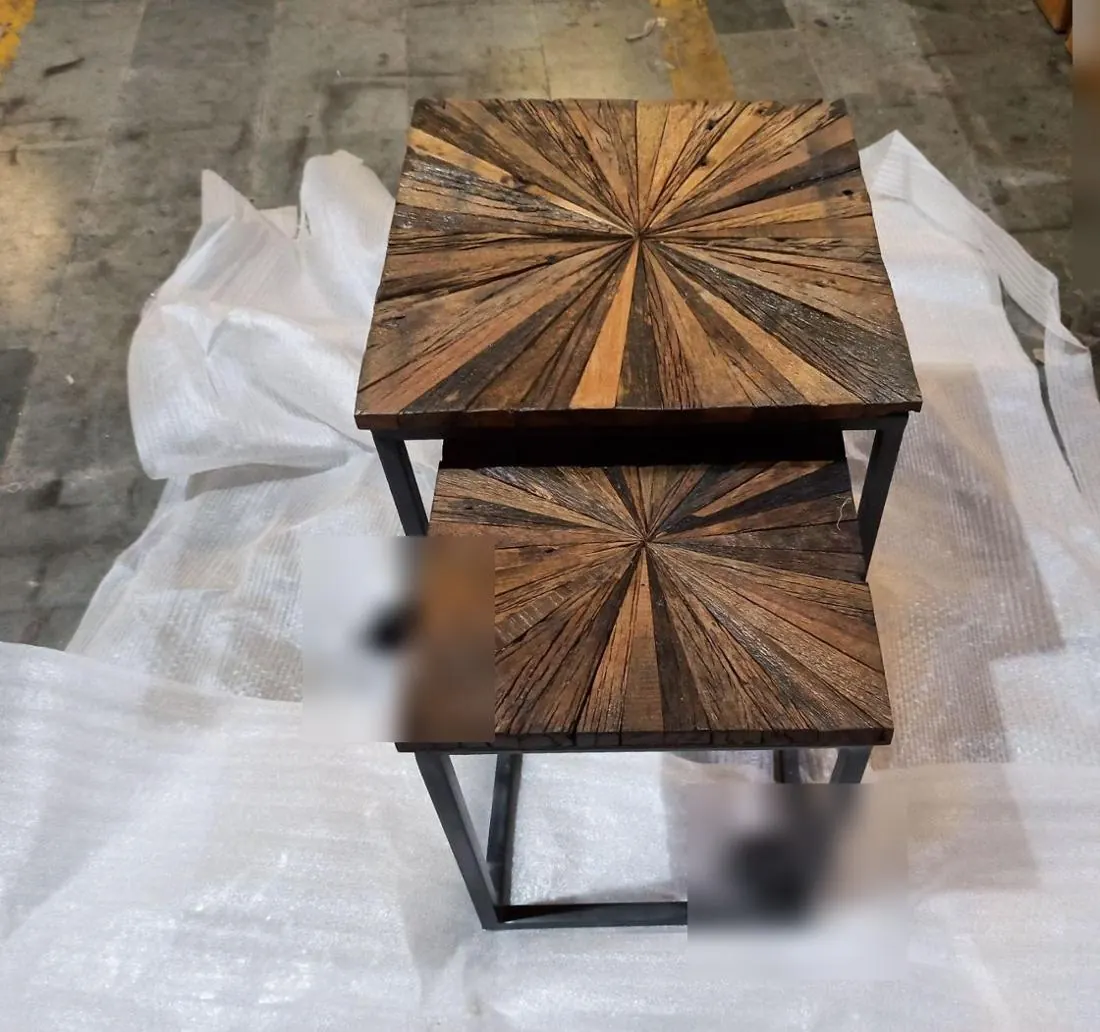
Our Sample 05 report shows both sides of this. Nine mango-wood side table SKUs, in three sizes and three colours, all passed. A nesting set of two in the same lot was rejected: the pieces came in two size variants, the colour varied across the lot and the ironwork was poor.
From our inspections
Real photos from our published sample reports, anonymised. Click a source to read the full report.
What we check on side tables
| Check | How it is checked | What fails |
|---|---|---|
| Size per variant | Measure each sampled piece and compare with its own SKU, not the range average | Two size variants within one SKU; S, M and L too close or overlapping |
| Colour per finish | Line up pieces of the same finish in daylight against the approved sample | Visible shade difference within one finish code |
| Nesting fit | Slide every nesting set together and apart | Smaller table scrapes, jams or does not fit under the larger one |
| Wobble | Stand on a flat surface, press each corner of the top | Rocks; feet not in one plane |
| Lean and push | Press down on the top edge and push sideways with a hand load the buyer sets | Table lifts a foot or tips; C-shaped tables tip toward the open side |
| Top fixing | Lift the table by its top; check screws and brackets from below | Top lifts off the base, loose tray, screw tips through the surface |
| Carton and barcode | Open cartons, compare the piece with the carton mark, scan the barcode | Wrong size or colour in a carton; label for a different SKU |
Sampling has to cover the matrix. If a lot has nine side table SKUs, the inspector draws from every SKU in proportion, so a small finish run is not left out.
Common side table defects
| Defect | Typical class | Notes |
|---|---|---|
| C-table or tall pedestal table that tips under a normal lean | Critical | Can fall onto a child or spill a hot drink |
| Wrong size or colour in a carton | Major | The customer receives a different product from the listing |
| Nesting set that does not nest | Major | The set loses its main function |
| Colour varies across the lot | Major | Sets and pairs look mismatched in the home |
| Poor welds or rough ironwork on a stand | Major | Sharp edges, weak joints |
| Wobble within the agreed gap but noticeable | Minor | Adjustable glides can fix it |
| Small scratch, glue mark, raised grain | Minor | Cosmetic |
Drum and log-section tables are cut from thick solid wood. These are prone to radial cracks as they dry, so the inspector checks the end grain closely and records moisture readings if they are in scope.
Market rules for side tables
Side tables have no dedicated law in the US, EU or UK, and they sit below the tip-over rules written for storage furniture. What applies:
- EU: EN 12521:2023 for domestic tables is the usual buyer specification, used as evidence of safety under the GPSR. Wood needs EUDR due diligence, and finishes fall under REACH.
- US: the Lacey Act declaration for wood, lead in paint under 16 CFR 1303, and Prop 65 warnings where a listed chemical is present.
- Composite panels: an MDF shelf or plywood top needs TSCA Title VI compliance and labelling for the US.
A side table with drawers is still a table. It is not a clothing storage unit under the STURDY Act rule, though a tall bedside chest can be. See bedside tables for where that line sits.
Packing and transit risks
Nesting sets usually ship in one carton, with the small table inside or under the large one. Unless there is foam or board between them, the pieces rub together for weeks and arrive scuffed at every contact point. Single side tables are light, so cartons get stacked high in the container; we check carton strength and that corner blocks stop the top from punching through. Iron stands need the legs wrapped separately so a weld cannot dent the wooden top.
What to put in your side table PO
- A size table per SKU with tolerances, and the nesting clearance for sets.
- A finish code and a signed colour sample for every colour, kept at the factory.
- A stability requirement for C-tables and pedestal tables, such as a hand load at the top edge.
- Carton marks and barcodes per SKU, with a photo of the label artwork.
- Separation material between pieces packed in one carton.
When the matrix is large, ask us how many man-days it needs before you book.