How iron and steel furniture is made in India
Most "iron" furniture exported from India is mild steel. Factories buy round, square and rectangular hollow tube, flat bar and sheet, cut it to length, bend or roll it on jigs, and join it by arc or MIG welding. Joints are then ground flush by hand. The frame is cleaned, often by degreasing and de-rusting, sometimes followed by a phosphate pre-treatment, and finished in one of four ways:
- Powder coating. Electrostatically sprayed powder, cured in an oven. The most common finish for indoor and outdoor frames.
- Wet paint. Liquid paint or lacquer, often used for distressed, antique and two-tone looks.
- Hot-dip galvanising. The frame is dipped in molten zinc, then sometimes powder coated as a duplex system for outdoor use.
- Raw or "industrial" finish. Bare steel sealed with clear lacquer or wax. It looks honest but rusts quickly if the seal is thin.
In Jodhpur, wood-and-iron pieces, such as iron bases under mango or acacia tops, are a common export product; our Sample 04 report below is one example. Moradabad, long known for brassware, now also works in iron, aluminium and stainless steel, according to the Uttar Pradesh One District One Product programme. Many factories outsource welding or powder coating to smaller job shops, so the quality of a frame can depend on a subcontractor the buyer never sees.
From our inspections
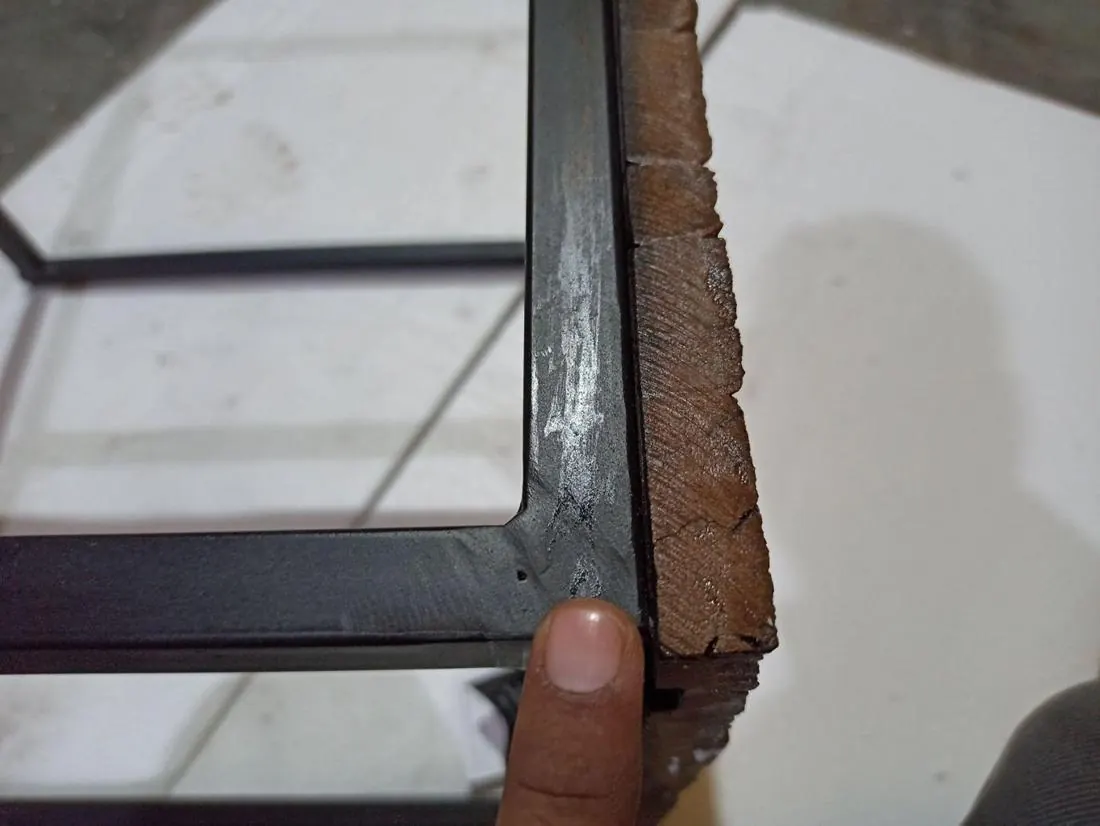
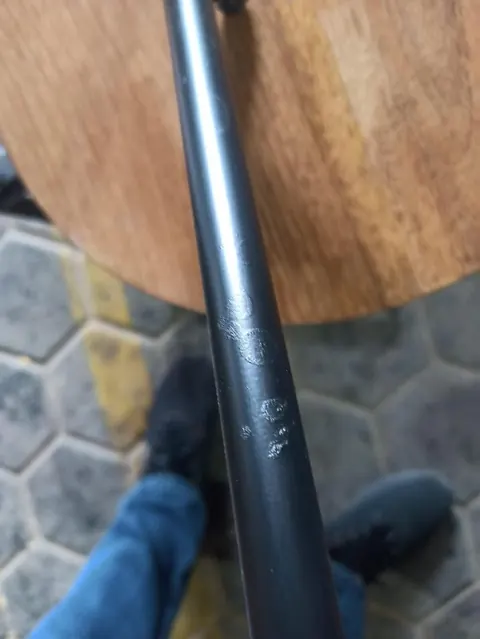
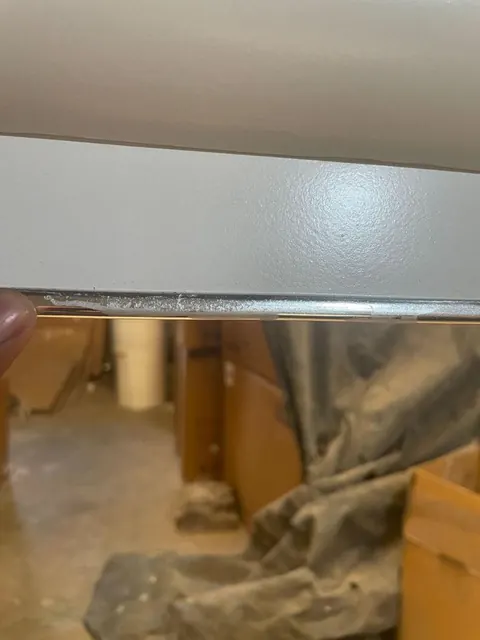
Real photos from our published sample reports, anonymised. Click a source to read the full report.
What we check on metal furniture
| Check | How it is checked | What fails |
|---|---|---|
| Weld quality | Visual check of every accessible weld; load by hand on chairs, stools and shelves | Cracks, porosity (pin holes), undercut, incomplete or skipped welds, weld spatter left on visible faces |
| Frame geometry | Tape and square on frames; the piece is stood on a flat surface to check rocking | Twisted frames, legs of unequal length, out-of-square bases that will not meet the top |
| Coating thickness | Magnetic dry-film thickness gauge on steel (the method of ISO 2178), several points per piece | Readings below the minimum in your specification, thin coat on edges and inside corners |
| Coating adhesion | Cross-cut test on an agreed hidden area or a test panel (ISO 2409), tape pulled off and the grid rated. ISO 2409 does not suit textured coats or coats over 250 µm | Flakes lifting at the cuts beyond the agreed class |
| Rust and corrosion | Inspection of tube ends, drain holes, weld seams and the underside of frames | Rust spots, rust bleeding from seams, bare steel inside open tubes |
| Edges and ends | Gloved hand run along edges, tube ends and brackets | Burrs, sharp sheet edges, missing end caps or glides |
| Finish and colour | Against the approved sample under daylight | Orange peel, runs, scratches, colour or gloss out of range |
| Fixing points | Trial fit of tops, test-fit of bolts in threaded inserts | Stripped threads, holes off-line, paint inside threads |
Salt spray resistance, measured to ISO 9227 or ASTM B117, is a lab test. It takes days or weeks and cannot be done at the factory. If you need it, we can pull and seal frames for a lab.
Common iron and steel furniture defects and how they are classed
The class depends on your specification; this is a typical starting point.
| Defect | Typical class | Why |
|---|---|---|
| Cracked or incomplete weld on a load-bearing joint | Critical | The piece can collapse in use |
| Sharp edge or burr that can cut a hand | Critical | Injury risk on first touch |
| Frame rocks or is visibly uneven | Major | The customer will return it |
| Coating below the specified thickness, or failing cross-cut | Major | Early rust and peeling |
| Rust spots or rust inside tubes | Major | Spreads in transit and in humid homes |
| Scratches, small chips, weld spatter on hidden faces | Minor | Cosmetic, often touched up on site |
Our Sample 04 report covered wood, iron and marble furniture in Jodhpur. One table had an uneven iron frame with scratches, recorded as major, and five more styles had scratches on iron stands and frames, recorded as minor. Together with cracks in wood and marble, the lot was Not cleared.
Market rules that apply to metal furniture
- United States: lead in paint. 16 CFR 1303 bans furniture for consumer use that bears paint or a similar coating with more than 90 ppm lead. Powder coats count as surface coatings. A lab tests the coating; the inspector checks that the report covers the colour and supplier actually used. See CPSC and CPSIA rules.
- United States: clothing storage. Metal chests and wardrobes over 27 in tall fall under the STURDY Act and ASTM F2057-23, with tip-over testing, labels and a tip restraint.
- California. Coatings and some alloys can contain listed chemicals such as lead, which may need a Prop 65 warning.
- European Union. REACH applies to coatings and to the article itself, including the 0.1% SVHC information duty. The GPSR requires a safe product and an EU responsible person on the label or packaging.
- Wood parts. If the frame carries a wooden top, the timber rules still apply: Lacey Act for the US and EUDR for the EU.
Packing, transit and loading risks
Metal furniture rarely breaks in transit, but its finish does. The main risks are:
- Rubbing. Metal against metal, or a frame against a carton staple, wears through powder coat on a long voyage. Each frame needs foam or bubble wrap at every contact point, and legs packed so they cannot touch.
- Condensation. Steel packed warm and damp, or loaded during the monsoon, can rust inside a sealed container. Check that frames are dry before wrapping, and agree desiccants for long routes.
- Weight. Heavy bases crush the cartons below. Check carton grade and gross weight against the specification, and stack heavy cartons at the bottom during loading.
- Hardware. Bolts for knock-down frames go in a labelled bag fixed inside the carton, with the right count.
What to put in your purchase order
- Steel grade, tube sizes and wall thickness for each model.
- Finish system: pre-treatment, powder or paint type, colour reference, gloss level and minimum dry-film thickness in microns.
- Adhesion class required in the cross-cut test, and whether a salt spray test is needed and for how many hours.
- Galvanising requirement for outdoor frames, if any.
- Weld standard: all joints fully welded, ground flush on visible faces, no spatter.
- End caps, floor glides and levellers on every leg.
- Lead-in-paint and REACH test reports on file for each colour.
- Packing: wrap at every contact point, carton grade, maximum gross weight, drop test protocol.
To check these on your next order, book an inspection. Pricing starts at US$249 per man-day; see pricing.
Sources
- 16 CFR Part 1303, Ban of Lead-Containing Paint (eCFR)
- ISO 2409:2020, Paints and varnishes: cross-cut test
- ISO 2178:2016, Non-magnetic coatings on magnetic substrates: coating thickness, magnetic method
- ISO 9227:2022, Corrosion tests in artificial atmospheres: salt spray tests
- Uttar Pradesh ODOP: Moradabad metal craft