Key takeaways
- A defect's class decides the verdict. One critical defect fails a lot; majors and minors are counted against the AQL accept numbers.
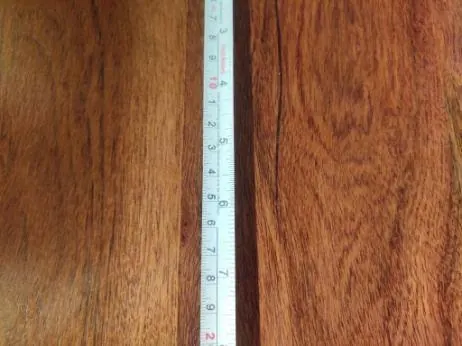
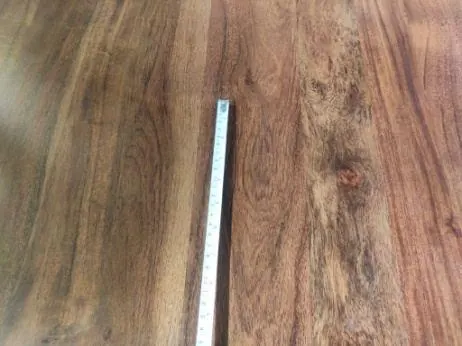
- Cracks in solid wood and marble, and poor crack filling, were the main reasons lots failed in our six published furniture reports.
- Natural variation in mango, sheesham and acacia is not a defect if your specification defines the accepted range. Without that range, it becomes an argument.
- Defects fixed on site still need a re-check before the goods ship.
How defects are classed
Inspection reports put every defect into one of three classes. The buyer's defect list decides the class; the usual meanings are:
- Critical: could injure the user or breaks a legal requirement. Accept number zero: one critical defect fails the lot.
- Major: likely to cause a return or complaint, or makes the product fail in use.
- Minor: a small departure from the standard that most customers would accept.
A common furniture plan is zero critical, AQL 2.5 for major and AQL 4.0 for minor, at general level II of ISO 2859-1. The tables below give the usual class for each defect, and where it appears in our real, anonymised sample reports.
From our inspections
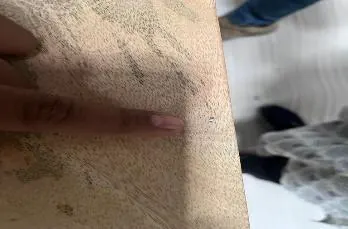
Real photos from our published sample reports, anonymised. Click a source to read the full report.
Structural and joinery defects
| Defect | Usual class | Notes and real examples |
|---|---|---|
| Storage unit tips forward with drawers or doors open | Critical | Sample 05: a five-drawer cabinet tipped with all drawers open and had no provision for an anti-tip kit. The lot failed on this alone. |
| Broken or split leg, rail or frame that could give way | Critical | Major if it cannot lead to collapse |
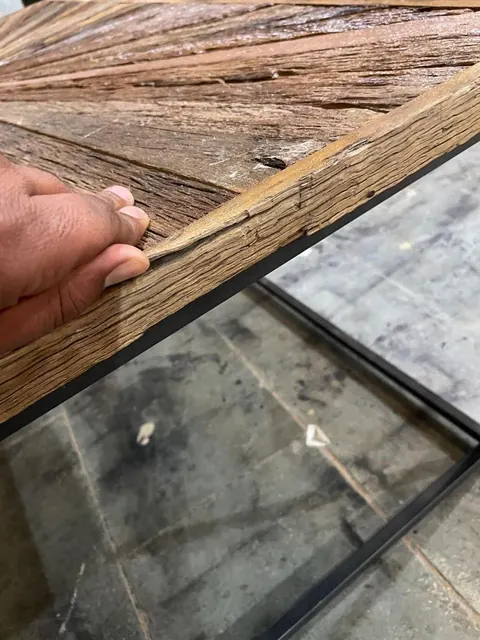
| Crack in a solid-wood top, panel or frame | Major | Sample 03: end crack in a dining table top. Sample 04: crack in a wooden cabinet and in a mirror frame corner. |
| Open, gapped or glue-starved joint | Major | Gaps widen as the wood dries in a heated home |
| Table or chair rocks; frame racks when pushed | Major | Checked on a flat floor, with a gentle push at a corner |
| Shelf or top not level | Major | Sample 04: a cabinet shelf that did not sit level |
| Warped, cupped or twisted top or door | Major | Measured with a straightedge; doors that no longer close flush |
Cracks deserve a note on cause. Wood that is wetter than the destination's indoor climate shrinks after delivery and cracks then, not at the factory. See wood moisture content for export furniture.
Wood and material defects
| Defect | Usual class | Notes and real examples |
|---|---|---|
| Visible epoxy (araldite) or putty filling | Major | Sample 03: a dining top rejected for visible araldite filling |
| Poor filling of cracks: sunken, cracked or off-colour | Major | Sample 04: bad filling on cracks in three TV units, rectified on site |
| Live insect activity: fresh holes with powder (frass) | Critical for most buyers | Can spread to other goods and breach plant-health rules at import |
| Old insect holes, loose or dead knots | Minor to major | Depends on the accepted range in the specification |
| Mould, damp smell | Major | Often from packing wet wood or wet finish in polybags |
| Moisture content over the limit | Major | Measured with a calibrated meter on every solid-wood style |
| Colour or grain outside the approved range | Major | Sample 05: colour finish varied across a set of nesting tables |
| Crack in a marble or stone top on wooden furniture | Major | Sample 04: two black marble tops to be replaced |
Mango, sheesham and acacia vary a lot in colour and grain from log to log. Put photos of the lightest and darkest acceptable pieces in the specification, or approve a golden sample with limit samples.
Finish and surface defects
| Defect | Usual class | Notes and real examples |
|---|---|---|
| Finish colour or sheen differs from the approved sample | Major | Cannot be judged without a sealed sample; in Sample 01 none was available |
| Grinding or sanding marks | Minor | Sample 01: grinding marks on a dining table top |
| Paint tears, runs or drips | Minor | Sample 02: paint tears on a bar cabinet |
| Uneven or improper finish | Minor | Sample 02: improper finish on a media cabinet; touch-up advised |
| Scratches and spots | Minor; major if large on a top | Sample 04: scratches on iron frames, a spot on a wooden top |
| Chipped edges or corners | Minor | Sample 05: chipping on a side frame, rectified on site |
| Bubbles, orange peel, white haze (blush) in lacquer | Minor to major | Haze often comes from finishing in humid weather |
| Glue squeeze-out or finish on hidden faces missing | Minor | Unfinished undersides also take up moisture faster |
Cosmetic faults are judged at a set distance and light, often arm's length in daylight. Write the viewing rule into your checklist so minor and major are applied the same way each time.
Function, hardware, size and safety defects
| Defect | Usual class | Notes and real examples |
|---|---|---|
| Nail, staple or screw point sticking out; sharp edge or splinter | Critical | Injury risk to the user |
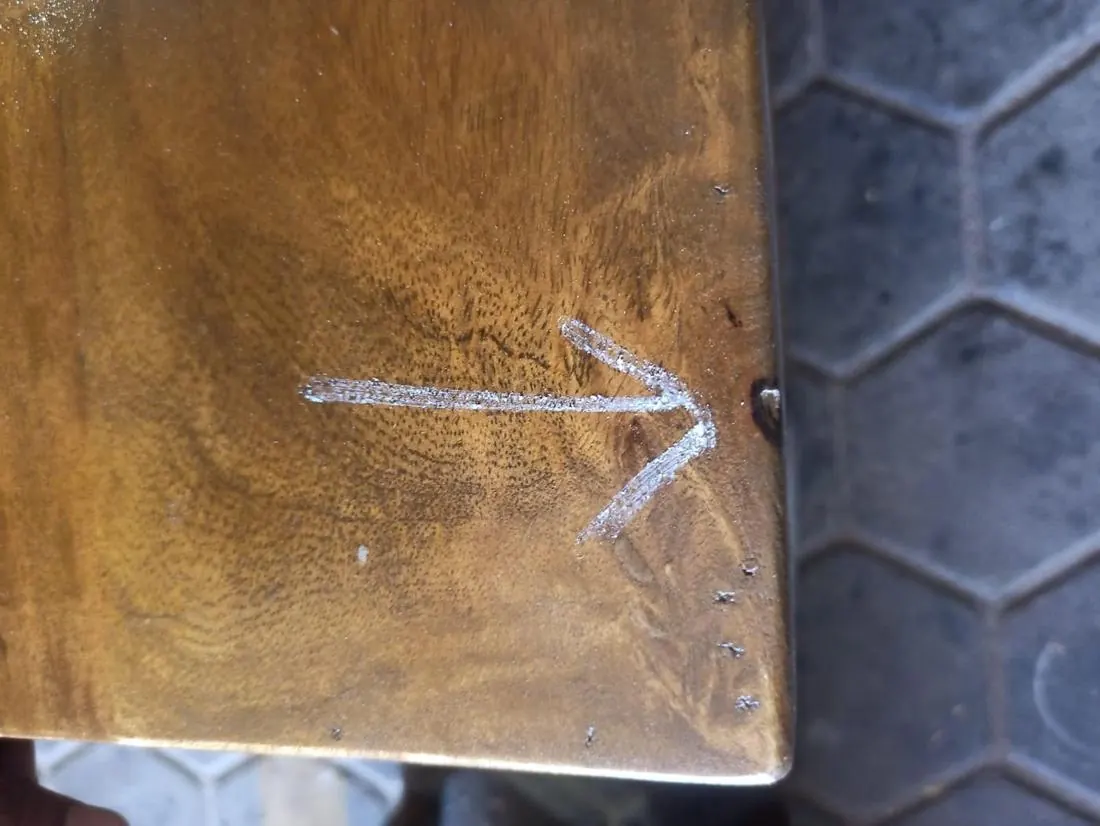
| Nail heads visible on the surface | Minor | Sample 01: nails visible on a sideboard |
| Missing warning label on US clothing storage units | Critical for most buyers | Required under the STURDY Act rule |
| Faulty built-in light or wiring | Major; critical if there is a shock risk | Sample 06: light fitting corrected on every unit during the visit |
| Size varies within one style | Major | Sample 05: nesting tables made in two size variants |
| Size outside tolerance | Major | Needs a tolerance in the PO; in Sample 01 deviations up to +1.5 cm could only be reported |
| Drawer sticks; door hangs out of line | Major | Often from swelling or a racked carcass |
| Missing or wrong fittings in the hardware bag | Major | Checked against the bill of materials |
| Uneven metal frame or poor ironwork on wood-and-iron pieces | Major | Sample 04, Sample 05 |
How to prevent the common ones
- Write the defect list. Name each defect, its class and its limit. See how to write an inspection checklist.
- Set tolerances and ranges: dimensions, colour and grain, knots, filler allowed or not.
- Seal a golden sample at the factory for finish and colour.
- Set a moisture limit and include it in the scope.
- Book a during-production inspection on new styles, so cracks and size problems are found while the rest can still be corrected.
- Re-check on-site repairs. Filling and touch-up done during a visit should be seen again before shipping; see what to do after a failed inspection.
Clear To Load inspects wooden furniture across India, with inspectors based in Jodhpur, Jaipur, Saharanpur and other cities. See solid wood furniture inspection or book an inspection.