Key takeaways
- Hold and Not cleared are different results. Hold asks for your decision; Not cleared means the lot failed and needs rework and reinspection.
- Sort the findings first: a critical defect or a lot-wide problem needs a different fix from a few scattered faults.
- Put the corrective plan in writing, with what will be fixed, how, by when, and who pays for the reinspection.
- A reinspection draws a fresh random sample from the reworked lot. It is not a look at the pieces the factory repaired.
First, check which result you have
A Clear To Load report ends in one of three verdicts. Only one of them is a fail. Read the result line before you call the factory.
| Verdict | What triggered it | Your next step |
|---|---|---|
| Not cleared | Any critical defect; major or minor defects at or above the AQL reject number; or a failed safety or function test. | Stop the shipment. Agree rework with the factory and book a reinspection. |
| Hold | AQL results within limits, but something needs your decision: a quantity shortfall, packing or labels that differ from your specification, a colour or finish difference from the approved sample, missing documents, goods reworked during the visit, or an inspection that could not be completed in full. | Decide each open point. Some need a fix and a re-check; some you can accept in writing. |
| Cleared to load | The lot meets your specification and AQL limits. | Ship. Minor findings may still be worth a touch-up request. |
See the Cleared to load verdict for how these map to pass, pending and fail, and AQL sampling explained for accept and reject numbers.
From our inspections
Real photos from our published sample reports, anonymised. Click a source to read the full report.
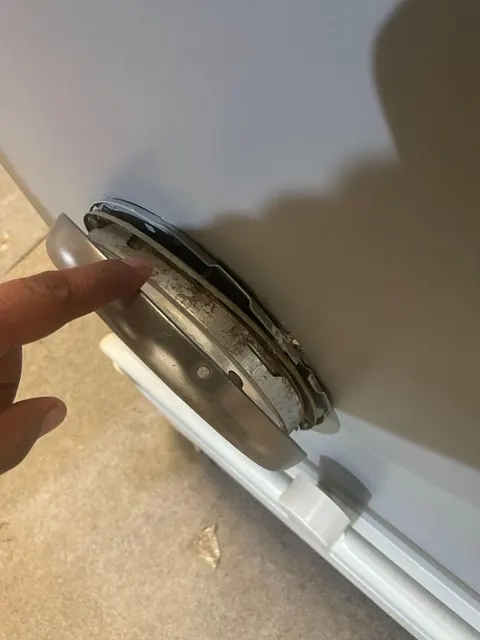
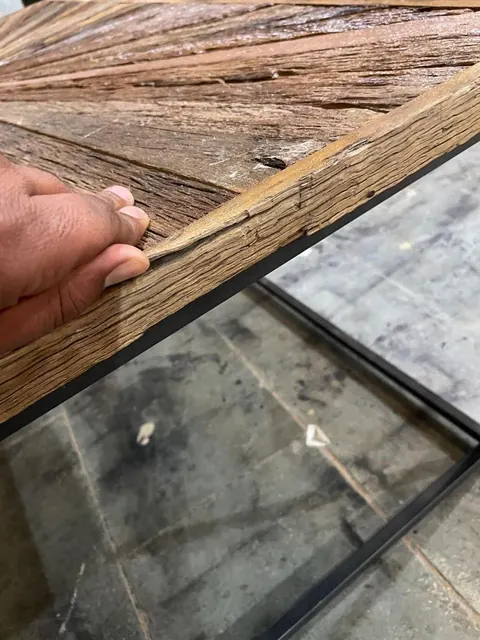
Read the findings: one-off or lot-wide?
The report lists every defect with its class (critical, major or minor), the style it was found on, how many pieces and a photo. Before you decide anything, sort the findings into three groups.
- Design or safety problems. One unit that tips over usually means every unit of that style will. In Sample 05 a five-drawer cabinet tipped forward with all drawers open and had no provision for an anti-tip kit. That is a critical defect and fails the lot on its own. Reworking a few pieces will not fix it; the style needs a design change or an anti-tip kit on every unit.
- Lot-wide process problems. Size or colour that varies across a style, or poor finishing on one process, points to the production method. In the same report, nesting tables came in two size variants and the colour varied across the lot. Expect the whole style to need sorting or rework.
- Scattered defects. Cracks, bad filling, scratches or a dented corner on individual pieces. In Sample 04, 8 major defects against a reject number of 6 came from cracks in wood and marble on several styles. These can usually be fixed by inspecting every unit and repairing or replacing the bad ones.
Ask yourself whether you would accept the defect if a customer saw it. If the answer depends on the defect, write a clear rule for it now; it will be needed at reinspection.
Your options after a Not cleared result
The decision to ship, accept or reject is always yours. These are the usual routes, and they can be combined style by style.
| Option | When it fits | Watch out for |
|---|---|---|
| Rework every unit | Lot-wide workmanship, finish or assembly faults the factory can correct. | Rework can damage finish or packing. Ask for repacking in new cartons where needed. |
| 100% sorting by the factory | Scattered defects. The factory checks every unit and removes or repairs the bad ones. | Quantity can fall short. Agree whether replacements are made or the order is reduced. |
| Replace or remake | Cracked tops, broken parts, wrong material. In Sample 03 two dining-table tops had to be replaced or remade. | New parts take time. Check the new ship date against your container booking. |
| Design change | Critical safety findings such as tip-over, sharp edges or electrical faults. | Do not accept a critical defect at a discount. It is a safety risk, and in the US a tip-over unit may fall under the STURDY Act. |
| Accept with a concession | Cosmetic major or minor defects you can live with, for example a slight colour shift on a low-value style. | Put it in writing, with the price change, and keep the report on file for later claims. |
| Partial shipment | Some styles passed and others did not. | Freight cost per unit rises; agree how the held styles will ship. |
| Cancel | Repeated failures, or a fix the factory cannot make in time. | Check your purchase order terms and any deposit before you cancel. |
Agree a written corrective plan with the factory
Send the factory the report pages that list the defects, or the photos, and ask for a written corrective action plan. A useful plan answers five questions:
- What will be fixed: each finding, by style.
- How: repair, replace, sort, repack, or change the design.
- Which units: the whole style or the whole lot, not only the pieces in the sample.
- When the reworked lot will be ready and packed for reinspection.
- Who pays for the reinspection and for any delay. Many buyers write into the purchase order that the supplier pays for a reinspection after a failed result.
Hold the balance payment and the container booking until the reinspection result is in. If the factory asks to ship first and fix it later, the defects arrive with your goods.
Where the cause is in materials, such as wet timber or a substituted panel, fix the cause for the next order too. A during-production inspection on the next run catches it while there is time to correct it; see when to book a DUPRO.
Book the reinspection
A reinspection is a new visit to the reworked lot. The inspector draws a fresh random sample from packed cartons and rechecks the failed points in full. It is not a look at the pieces the factory chose to repair.
- Timing. Book it when the factory confirms that the rework is finished and the goods are repacked. In Jodhpur and Jaipur a reinspection usually happens within 48 hours of the request.
- Price. A Clear To Load reinspection costs US$149 per visit, plus travel by band (no travel fee in Jodhpur). It is invoiced to the party that books it; whether you recover it from the supplier is a matter for your contract. See pricing.
- Scope. If only some styles failed, say whether the reinspection covers only those styles or the whole lot. If the result was close to the reject number across the board, a full re-check is safer.
- Loading. If the lot passes, book container loading supervision so that the reworked goods, not the rejected ones, go into the container. See the container loading checklist.
What to do after a Hold
A Hold is not a fail. The AQL results were within limits, but the report lists points that need your decision. Go through them one by one.
- Quantity short. Decide whether to ship what is ready or wait for the balance. If you wait, the balance may need its own inspection.
- Packing, labels or marks differ from your specification. Wrong barcodes, missing warning labels or a wrong country-of-origin mark can stop goods at customs or at your warehouse. These usually need correcting before shipment; see labelling and country of origin.
- Colour or finish differs from the approved sample. Compare the photos with your golden sample. Accept in writing, or ask for a correction.
- Goods reworked during the visit. In Sample 06 a faulty light fitting was found and corrected on every unit while the inspector was there. Because the fix was made on site, a re-check of the corrected units was advised rather than a clean pass.
- Inspection not completed in full. If most of the order was not packed, or access was limited, rebook for when the goods are ready.
Reply to us with your decision on each point. We can explain any finding and help you agree the next step with the factory.
Sources
- ISO 2859-1:2026, Sampling procedures for inspection by attributes, Part 1 (iso.org)
- Safety Standard for Clothing Storage Units, 16 CFR 1261, Federal Register, 4 May 2023
- Clear To Load terms: reinspection and verdicts
- Clear To Load sample inspection reports (six anonymised furniture inspections, 2022–2023)