What makes a wooden TV unit different
The general TV unit checks, such as top load, latches, glass and anchor kits, are on the TV units page. Timber checks such as moisture, species and joinery are on the solid wood furniture page. This page covers what happens when the two meet.
A wooden TV unit is wide and shallow: often 150 to 220 cm long and only 40 to 45 cm deep. That shape puts the grain of the top running lengthwise, so the top moves across its depth, front to back, as humidity changes. It also gives the factory a choice on almost every component:
- Top: edge-glued solid boards, or veneered MDF or plywood with a solid lipping.
- Sides, shelves and door panels: solid, veneered board, or a mix within one unit.
- Back: loose solid planks in grooves, or a plywood or MDF sheet nailed into a rebate.
Each choice changes cost, weight, how the unit moves after delivery and which import rules apply. Units are also often one piece of a living-room set, finished on different days from the coffee table and sideboard.
From our inspections
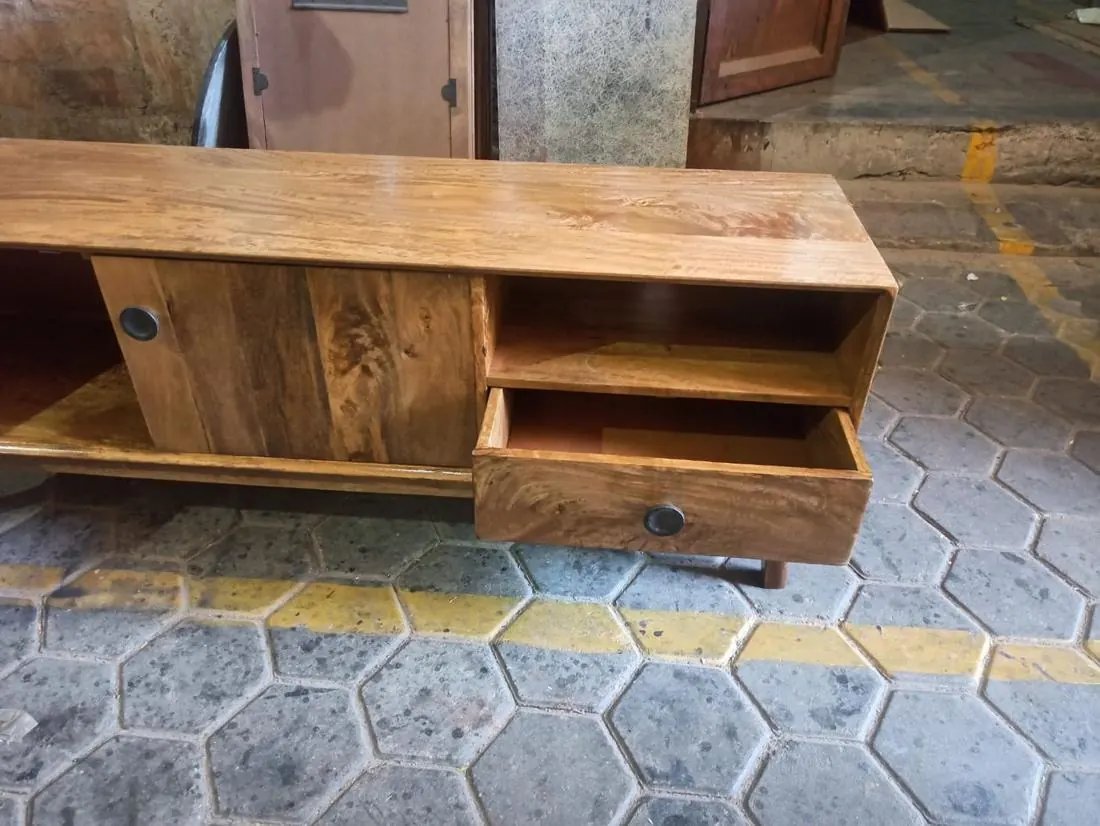
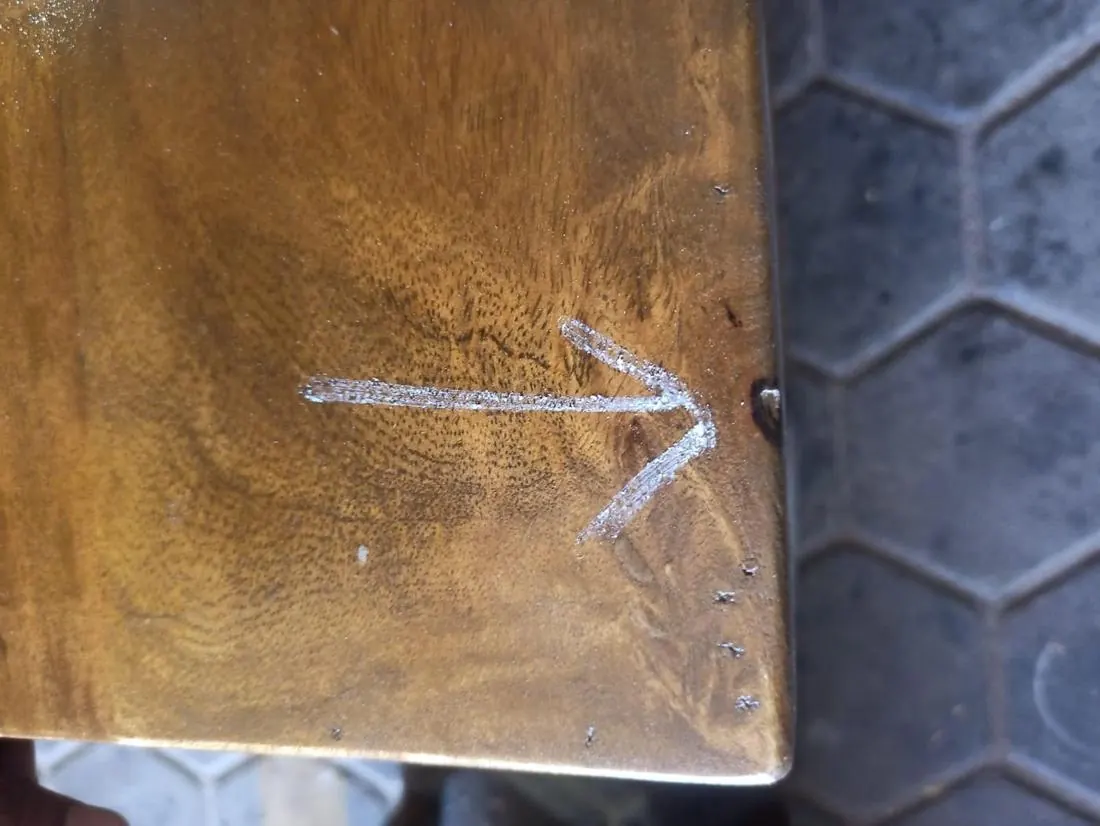
Real photos from our published sample reports, anonymised. Click a source to read the full report.
What we check on wooden TV units
| Check | How it is checked | What fails |
|---|---|---|
| Build by component | Each part (top, sides, shelves, door panels, back, drawer bottoms) recorded as solid or veneered against the specification | Veneered board where solid was ordered, or a solid lipping hiding a board core |
| Cable holes in solid timber | Distance from board ends and glue lines measured; inside of the hole checked for sealer | Hole cut across a glue line or near an end, raw end grain inside, a hairline split from the hole |
| Back panel movement | Plank backs: gaps between planks and whether they are glued or nailed in the middle. Sheet backs: nail line and the frame edge around it | Planks glued or nailed tight, frame split along a nail line |
| Top cup and front edge | Straightedge across the depth at both ends and the centre; front edge compared with the door and drawer faces | Cup beyond the agreed limit, top edge proud of or behind the fronts |
| Veneer quality | Edges and corners under raking light; tap along the surface for hollow spots | Sanded-through edges, bubbles, lifting at corners, open veneer joints |
| Grain run on the front | Drawer and door fronts viewed together as one face | Mixed heartwood and sapwood or clashing grain where a continuous run was approved |
| Finish across the set | TV unit placed beside the coffee table and sideboard from the same order, same light, against the master sample | Colour or sheen difference between pieces sold together |
Common wooden TV unit defects and how they are classed
| Defect | Class |
|---|---|
| Split in a leg or plinth joint that carries the top | Critical |
| Veneered board where solid was ordered | Major |
| Split running from a cable hole | Major |
| Badly filled cracks | Major |
| Top cupped beyond the agreed limit | Major |
| Veneer bubble or lifting edge | Major |
| Colour mismatch with the rest of the set | Major |
| Veneer sanded through on an edge | Minor (major on the top face) |
| Light showing between back planks | Minor |
Crack filling is the defect we have actually recorded on this product. In Sample 04 (Jodhpur, January 2023), three of six wooden TV units sampled had badly filled cracks, and the factory redid the filling on site. A re-filled surface is then re-finished by hand, so after an on-site repair the inspector should compare the repaired units with the rest of the set again.
How the panel choice changes the rules
On a wooden TV unit, the mix of solid and board decides which rules bite.
- US, TSCA Title VI. An all-solid unit is outside it. One MDF shelf or plywood back brings the whole unit in: certified panels, a compliance label and records. See TSCA Title VI.
- US, Lacey Act. The declaration needs every species in the unit, including the face veneer and the species in the plywood or MDF core. See Lacey Act.
- EU, EUDR. Plywood and MDF parts are wood too, so the due diligence must cover the board as well as the solid timber. See EUDR.
- Australia. Entertainment units need a toppling warning label at any height; a heavy solid unit is not exempt. See importing into Australia.
The inspector records the build of every component with photos, so your declarations match what was made.
Packing, transit and loading risks
- Veneer edges at carton corners. Veneer chips more easily than solid wood. Corner blocks should cover the lipping, not just the carton corner.
- Cupping in the container. A solid top wrapped tight on one face and open on the other dries unevenly. Both faces should be finished and wrapped the same way.
- Set pieces from different batches. Mark cartons with the finish batch so the TV unit, coffee table and sideboard that leave together also match.
- Loose back planks. Plank backs that are meant to float can rattle and mark the finish; a foam strip or tape holds them in transit.
Heavy solid units belong at the bottom of the stack. Container loading supervision checks this.
What to put in your purchase order
- A component list saying solid or veneered board for each part, with veneer species and core type.
- Minimum distance of cable holes from board ends and glue lines, and that the inside of each hole is sealed.
- Back-panel build: floating planks in grooves, or a sheet fixed at a stated nail spacing.
- How the top is fixed to the carcass (buttons or slotted holes) and the maximum cup across the depth.
- Grain and colour rules for the front, and one finish master sample for the whole set.
- Labels for each market, such as the TSCA Title VI label and the Australian toppling label.
Comparing materials? See metal TV units. For the matching storage piece, see wooden sideboards. Book a pre-shipment inspection once most of the order is packed.