What 'reclaimed' means in Indian factories
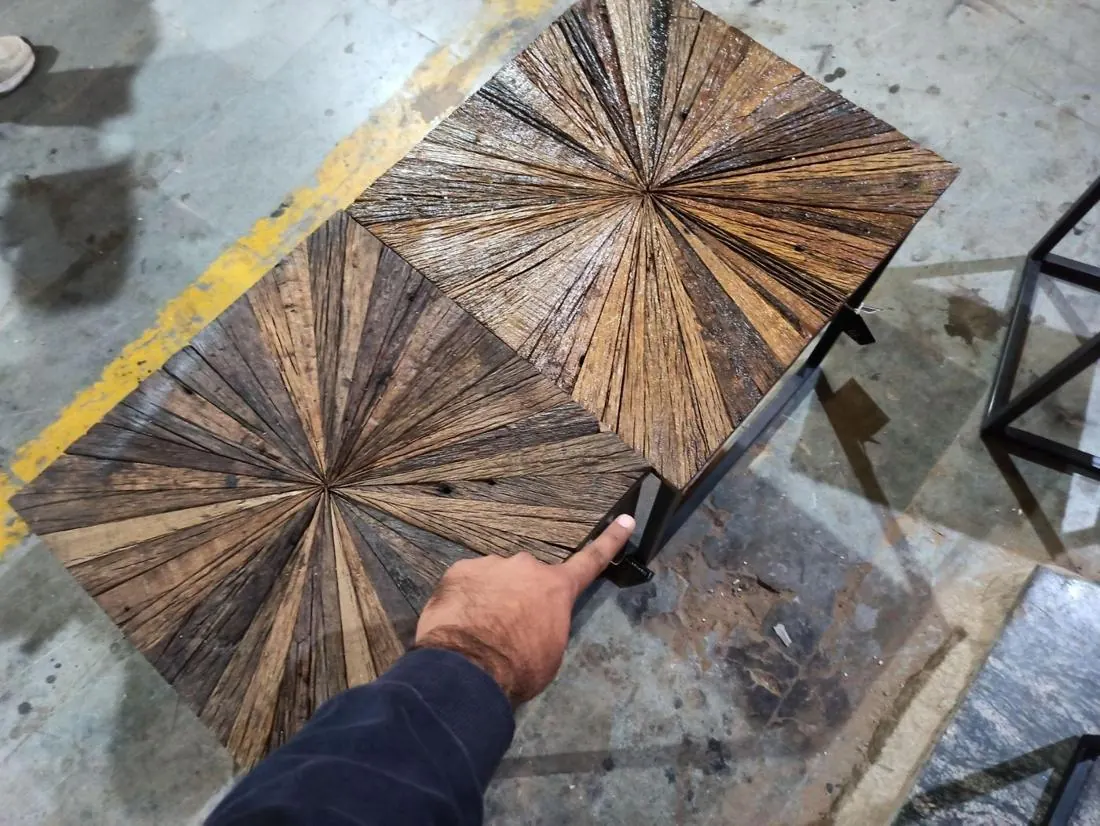
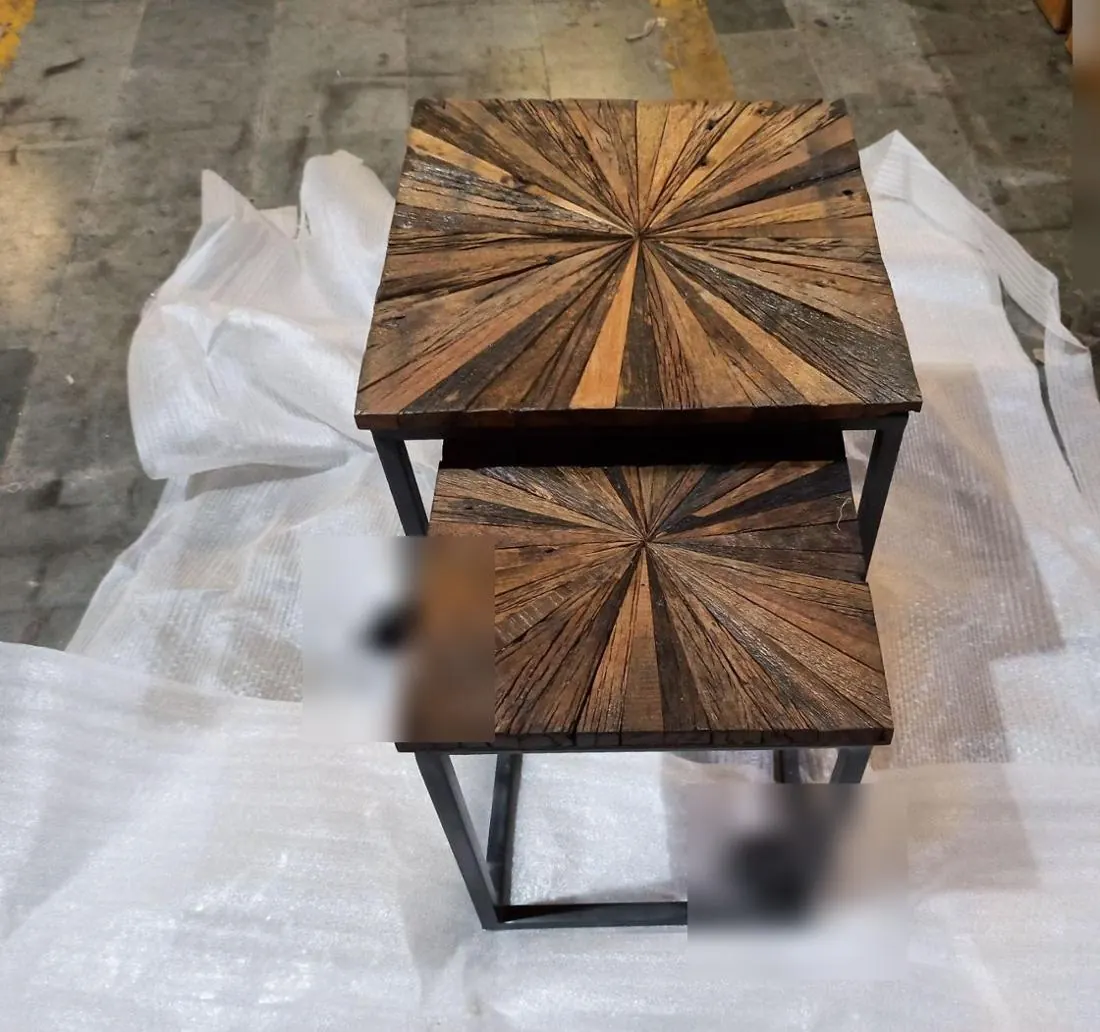
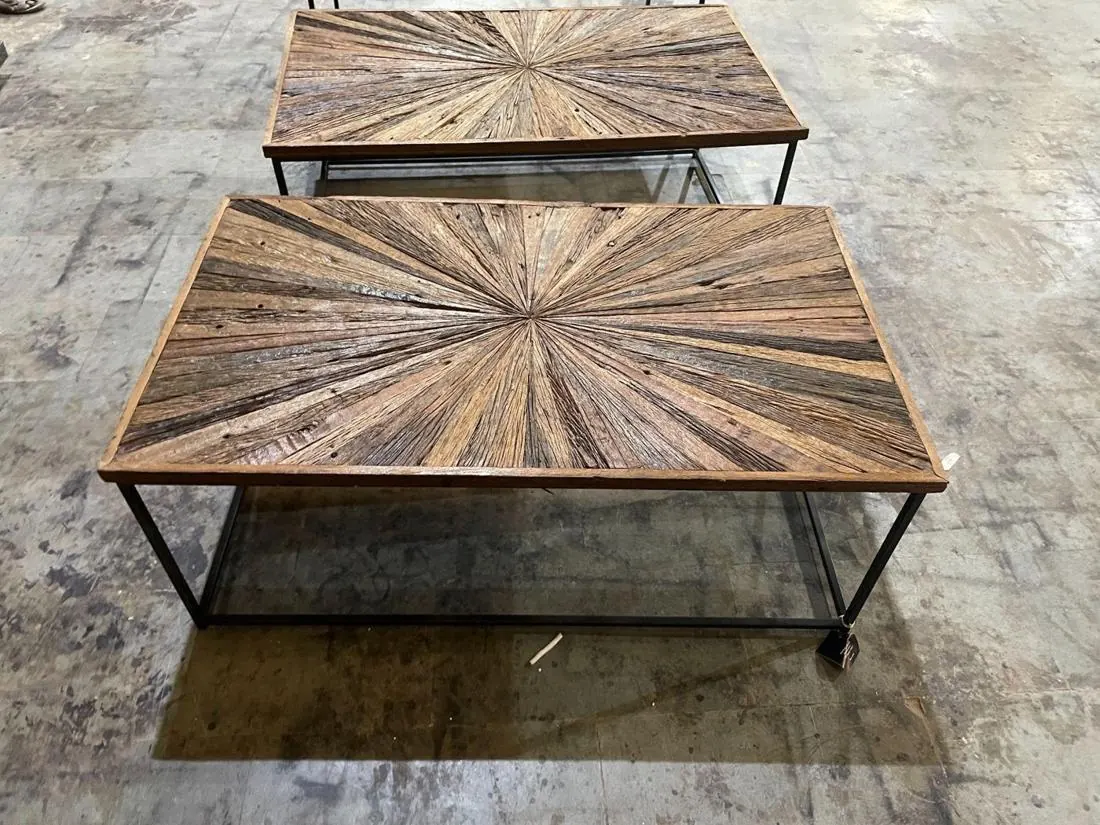
Reclaimed wood furniture is made from timber that has already had one life: doors, window frames, beams, floorboards and old furniture from demolished or renovated buildings. Factories buy it from scrap and salvage dealers, pull out the hardware, re-saw it and build new pieces, often with new wood for drawer boxes, backs and tops, or with iron frames. Our Sample 05 is a real inspection of mango and reclaimed-wood furniture in Jodhpur.
The word is used loosely in the trade. Buyers meet three different things under the same name:
- Fully reclaimed: every wood part is salvaged timber.
- Part reclaimed: a reclaimed frame or front with new wood or plywood elsewhere.
- Reclaimed look: new wood, distressed, washed or painted to look old.
All three can be good products. The problem is when the order says one and the factory makes another, because the compliance position and the defect risks change.
From our inspections
Real photos from our published sample reports, anonymised. Click a source to read the full report.
What we check on reclaimed wood furniture
| Check | How it is checked | What fails |
|---|---|---|
| Embedded metal | Every surface checked by eye and hand; a handheld metal detector pass where the specification asks for it | Protruding nails, screw tips, staples or broken bolts; cut-off metal flush with a surface that touches skin |
| Splinters and sharp edges | Hand and cloth run over tops, edges, handles and seat areas | A cloth that snags, raised splinters, sharp broken edges |
| Old paint | Visible old paint and residue recorded by part; samples pulled for a lab where the buyer requires lead testing | Old paint where the specification says stripped wood, or a failed lab result |
| Insects and decay | Old holes checked for fresh powder; ends and joints probed with a blade for soft wood | Fresh frass, soft or crumbling wood, especially in legs and rails |
| Moisture | Pin meter on old and new parts separately; readings on mixed species are recorded as indicative | Readings above the limit (default 11%), or a large gap between old and new parts |
| Make-up of the piece | Each component recorded as reclaimed, new solid wood, plywood or MDF, with photos | New wood or panels where the order says fully reclaimed |
| Colour and character | Pieces lined up against light and dark limit samples | Pieces outside the agreed range, or heavy filler that hides old damage |
Common reclaimed wood defects
| Defect | Typical class | Note |
|---|---|---|
| Nail or metal point standing proud of a surface | Critical | Can cut the user |
| Decay in a load-bearing part | Critical | The piece can collapse in use |
| Live insect activity | Critical or major, per the buyer's list | Old timber often carries old infestations; fresh powder means they are active |
| Raised splinters on a used surface | Major | Tops, seats, handles and front edges |
| Old crack that opens under load | Major | Age cracks are accepted only where they do not weaken the piece |
| Colour outside the agreed range | Major or minor | Some variation is the point of reclaimed wood; the range must be agreed |
| Old nail holes, rust marks, saw marks | Not a defect if accepted | Usually part of the look; state it in the specification |
Old holes and cracks are character until they reach a load-bearing joint. A beam with old mortise holes can look fine and still be weak where a new leg is fixed. The inspector checks those points by hand under load.
EUDR, Lacey and lead: what is different for reclaimed wood
- European Union, EUDR. Annex I excludes goods produced entirely from material that has completed its lifecycle and would otherwise have been discarded as waste. Fully reclaimed furniture can fall outside the regulation; a reclaimed piece with new wood drawers, a new top or plywood back does not, and the new wood needs geolocation and legality data. Keep records that show which parts are reclaimed.
- United States, Lacey Act. The law's shortcut for recycled content is written for paper and paperboard only. For wood, where the species varies and is unknown, the declaration must list every species that may have been used, and every possible country of harvest. Mixed salvage timber makes this hard, so ask the factory what it can document.
- United States, lead in paint. Paint on furniture for consumer use must not exceed 90 ppm lead under 16 CFR 1303. Old paint on salvaged doors and windows may contain lead; if any old paint stays on the piece, test it at an accredited lab through lab testing coordination.
- Composite parts. Any plywood or MDF brings in TSCA Title VI for the US.
Packing and what to put in your purchase order
Reclaimed pieces are often heavy and irregular, with rough backs that can tear wrapping. We check that pieces are free of loose dust and frass before wrapping, that rough faces are padded, and that iron parts cannot rub through the carton. Insect-damaged pieces must come out before packing. Wood pallets need the ISPM 15 mark.
In the purchase order, state:
- Fully reclaimed, part reclaimed or reclaimed look, and which components may be new wood or panels.
- Metal: all nails and fixings removed, with no metal at or near any surface.
- Paint: stripped wood only, or old paint accepted subject to a lead test.
- Insect treatment applied to the salvaged timber, with records.
- Accepted character marks (nail holes, rust, saw marks) and a colour range, with limit samples.
- Moisture limit for old and new parts; our default limit is 11%.
Book an inspection, or see solid wood furniture for checks that apply to all timber.