How metal-clad furniture is made
Metal-clad furniture is a wooden piece covered in thin metal sheet. The carcass is built first, often in panels framed by raised mouldings. Brass, copper or white-metal sheet is then cut, hand-hammered and embossed with patterns, fitted over each panel and moulding, and fixed with small nails or pins, sometimes with adhesive underneath. Finishes range from bright polished brass to darkened "antique" patinas, usually sealed with lacquer.
The technique has old roots in Rajasthan. CEPT University's craft archive records a metal-clad low table, a bajot, that combines cladding, embossing and riveting with wood carving, found in Jodhpur and resembling work from Shekhawati. Modern export pieces such as sideboards, chests, side tables and mirror frames use the same idea at a larger scale. Ask where the sheet is embossed and where it is fitted: if two workshops share the job, quality problems tend to sit at the hand-over.
Two materials meet here and behave differently. The wood shrinks and swells with humidity. The metal does not. If the carcass is wet when clad, it shrinks later and the sheet buckles, lifts or pulls its nails. If the sheet is fixed too tightly over a dry carcass shipped to a humid climate, seams can open.
From our inspections
Real photos from our published sample reports, anonymised. Click a source to read the full report.
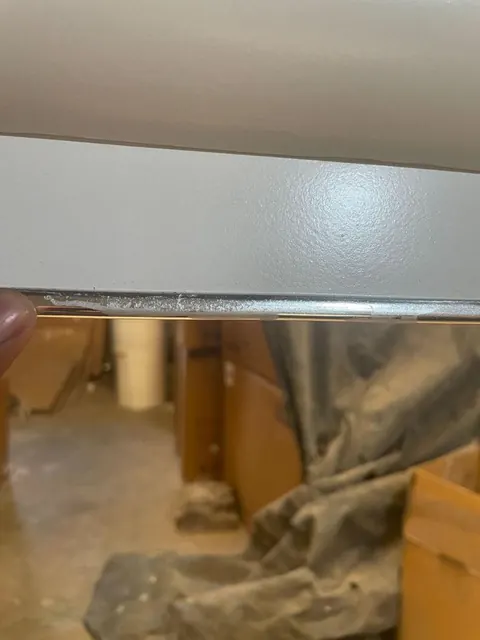
What we check on metal-clad furniture
| Check | How it is checked | What fails |
|---|---|---|
| Sheet edges and seams | Gloved hand along every edge, corner, handle cut-out and drawer front | Raw sheet edges, lifted corners, burrs: a cut hazard |
| Fixing | Raking light across panels; press test for hollow or springy areas | Sheet lifting, bubbles where adhesive failed, buckles |
| Nails and pins | Visual and fingertip check | Nail heads proud, bent or missing; uneven spacing; nails through to the inside of drawers |
| Embossing | Against the approved sample | Shallow or uneven pattern, pattern not aligned across doors |
| Dents and scratches | Raking light on all faces | Dents in sheet, hammer marks outside the design, deep scratches |
| Finish and patina | Against the approved sample in daylight | Patchy antique finish, fingerprints etched into brass, green verdigris spots, incomplete lacquer |
| Carcass | Moisture meter on exposed wood (inside, back, base); doors and drawers operated | Wet timber, cracks, drawers that bind because cladding added thickness |
| Weight | Weigh against the approved sample | A much lighter piece can mean thinner sheet than ordered |
Lead content in the brass is a lab test. We can pull sheet offcuts or finished parts for a lab.
Common brass and metal-clad furniture defects and how they are classed
| Defect | Typical class | Why |
|---|---|---|
| Sharp or lifted sheet edge, nail point through a surface | Critical | Cuts hands; often at drawer pulls and corners |
| Sheet lifting or buckled over an area | Major | Gets worse with handling and humidity |
| Missing or proud nails on a visible face | Major or minor | Depends on the number and where they are |
| Dents, clearly uneven patina, verdigris | Major | Visible on a decorative piece |
| Small scratches, slight nail-spacing variation | Minor | Hand-made character within tolerance |
Visible nails are a common finding on hand-made furniture. In our Sample 01 report, visible nails on a sideboard were recorded as one of two minor findings, and the lot was Cleared to load. On clad furniture, nails are part of the design, so the specification should say which nails are meant to show.
Market rules that apply
- EU: lead in brass. Lead has been on the REACH Candidate List of substances of very high concern since 27 June 2018. Many brass alloys contain lead, added for machining or carried in from recycled metal. If a component holds more than 0.1% lead by weight, the supplier must give customers safe-use information and the EU importer must notify ECHA's SCIP database. See EU REACH.
- California. Lead is a listed chemical under Prop 65, so exposed brass may need a warning.
- United States: painted parts. Painted or coloured lacquer surfaces on consumer furniture fall under the 90 ppm lead-in-paint limit of 16 CFR 1303; see CPSC and CPSIA rules.
- Wood. The carcass brings in the Lacey Act and EUDR, and TSCA Title VI if it is MDF or plywood. The wood is hidden under metal, so species records from the factory matter even more.
Packing, transit and loading risks
- Dents. Thin sheet dents from a knock through a carton. Faces need rigid board or thick foam, not bubble wrap alone.
- Tarnish. Bare or thinly lacquered brass tarnishes in a humid container. Pieces must be dry, handled with gloves, wrapped in clean, acid-free tissue and packed with desiccant on long routes.
- Snagging. Proud nails and sheet edges cut through wrap and catch on other cartons. One more reason to check edges before packing.
- Weight. Clad pieces are heavier than wooden ones of the same size. Check carton grade, gross weight and handling marks, and supervise stacking during container loading.
What to put in your purchase order
- Sheet metal (brass, copper, white metal), thickness, and lead content limit if you sell in the EU or California.
- Carcass material and moisture target before cladding.
- Fixing method: nails, adhesive or both; nail type, finish and spacing; which nails show by design.
- Finish: polished, antique or patina, colour reference, lacquer type, and a sealed approved sample.
- All sheet edges folded or turned under, no raw edges on touched surfaces.
- Packing: rigid face protection, gloves, acid-free wrap, desiccants.
Send this list with your inspection booking and the inspector will check each point.