What our real bar cabinet inspections found
Two of our published reports include bar cabinets, and they show the range of what goes wrong.
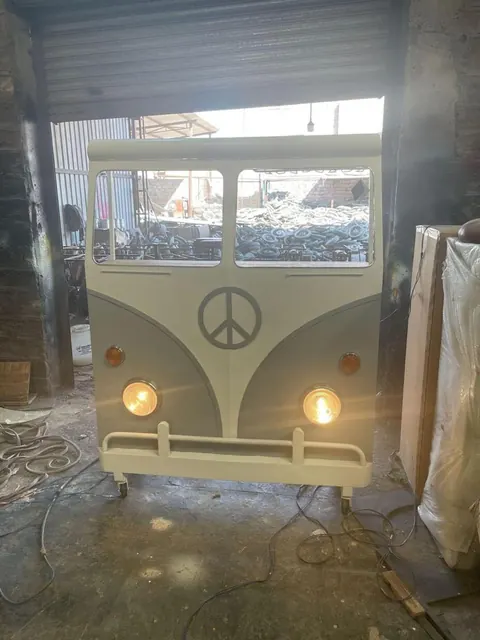
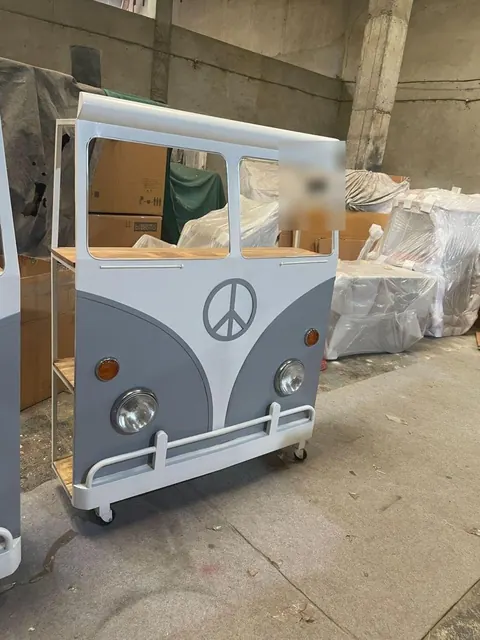
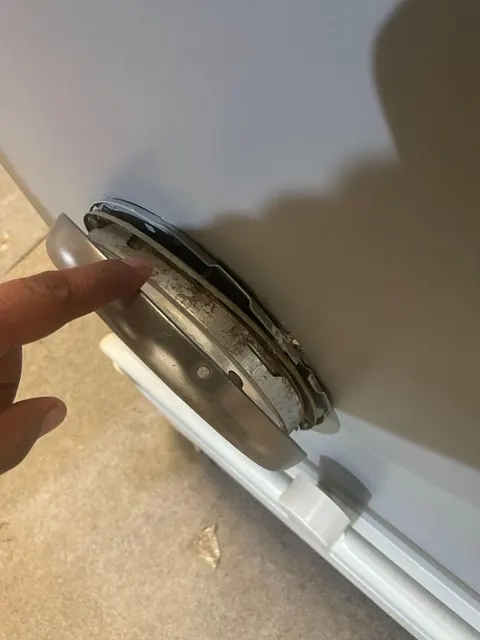
In Sample 06 (Jodhpur, January 2023), ten steel and wood bar cabinets on castors had built-in lighting. The light fitting was not right, so the factory opened every unit and corrected it during the visit. A spot on the steel frame was also fixed. Because every unit had been reworked, the result was recorded as Hold with a re-check advised, not a clean pass.
In Sample 02 (Jaipur, December 2022), a ribbed bar cabinet on castors had paint tears on one piece, a minor defect, with touch-up advised. The cabinet alone weighed 56.65 kg before any bottles went in, which is why castor checks matter. Function checks were not in the scope of the Sample 02 visit, which is a reminder to name castors, brakes, locks and glass holders in your inspection plan.
From our inspections
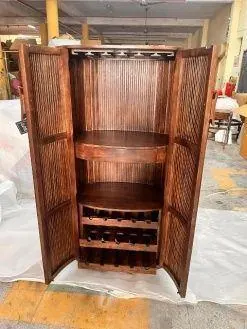
Real photos from our published sample reports, anonymised. Click a source to read the full report.
What we check on bar cabinets and trolleys
| Check | How it is checked | What fails |
|---|---|---|
| Stemware holders | Slide in the buyer's reference glass; check slot width, edge finish and that glasses hang level | Slots too wide or narrow, rough edges that chip glass, holder loose |
| Bottle racks | Fit a standard bottle in each position; check depth and lean | Bottles do not fit, roll or touch a door |
| Castors and brakes | Check castor type and rating label; roll the unit; lock the brakes and push | Castor rating below the loaded weight, brake does not hold, castor screwed into thin board |
| Locks and keys | Operate each lock with each key; count keys | Key does not turn, one key missing, lock loose in its cut-out |
| Mirrors and glass | Check fixing, edges, backing and silvering inside the cabinet | Loose mirror, chipped edge, black edges or spots in the silver |
| Lighting | Switch on every unit in the sample; check wiring routes, driver, plug and marks | Light does not work, wires pinched by a door or shelf, missing marks |
| Drop-down or pull-out bar top | Open, load with the buyer's figure, check stays and slides | Flap drops, stay bends, slide sticks |
| Trolley handle and rails | Pull by the handle; check gallery rails and tray fixing | Handle flexes or loosens; bottles can slide off |
Defect classes for bar furniture
| Defect | Typical class |
|---|---|
| Exposed live part, damaged cable, or wiring trapped by a moving part | Critical |
| Brake that does not hold; castor that collapses or detaches | Critical |
| Light fitting not working or wrongly fitted | Major |
| Mirror or glass shelf loose; chipped glass edge | Major |
| Stemware holder that lets glasses fall or chips them | Major |
| Lock that does not work; missing key | Major |
| Paint tears, spots on steel, small scratches | Minor |
Bar cabinets are often ordered in small lots. Sample 06 had ten units, where the major-defect plan accepts none. One major finding was enough to stop a clean pass.
Market rules that apply
- Built-in lighting, US. US retailers usually expect a UL or ETL listing for lighted furniture. A recognized component mark on a driver or cord does not make the finished cabinet listed.
- Built-in lighting, EU. Mains-powered parts fall under the Low Voltage and EMC Directives, with RoHS and WEEE for the electrical parts.
- Items that touch drinks. If the cabinet ships with trays, ice buckets or other items meant to touch drinks, food-contact rules apply: FDA in the US and EU 1935/2004 in the EU.
- Australia. Display cabinets 686 mm or taller are in Category 3 of the Toppling Furniture Information Standard 2024. A tall bar cabinet may fall there; check the definitions.
- Coatings and wood. Prop 65, REACH, the Lacey Act and the EUDR.
Packing and transit
A bar cabinet travels with glass inside it. Mirrors and glass shelves should be removed and packed in their own protected compartment, or fixed and boarded so they cannot move. Stemware rails and bottle racks need wrapping where they press against doors. Castors either ship detached in a labelled bag or are blocked so the unit cannot roll inside the carton. Keys should be taped inside, in a named place. On lighted units, the driver and cable must be tied back so packing does not crush them.
What to put in your PO
- Castor make, rating and how many have brakes.
- Reference glass and bottle sizes for holders and racks.
- Lock type and number of keys.
- Mirror and glass type, thickness and backing.
- Lighting: driver, voltage, plug type and the listing or CE documents required.
For small lots with lighting, book an inspection early enough that a rework and re-check still fit before loading.