The formula and how it is measured
MC % = (wet weight − oven-dry weight) ÷ oven-dry weight × 100
Because the base is the dry weight, MC can exceed 100% in green timber. The reference method weighs a specimen, dries it in an oven until its weight stops changing, and weighs it again (ASTM D4442; ISO 13061-1 for small clear specimens). It destroys the specimen, so inspections use handheld meters instead:
- Pin meters measure electrical resistance between two pins driven into the wood. They need a species setting and read the depth the pins reach.
- Pinless meters measure through the surface with an electrical field and leave no marks, but read a fixed depth and are affected by density.
Wood keeps exchanging moisture with the air until it reaches equilibrium moisture content (EMC), which depends on the humidity and temperature around it. A heated home in a northern winter pulls wood much drier than a workshop in the Indian monsoon.
From our inspections
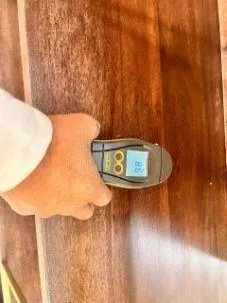
Real photos from our published sample reports, anonymised. Click a source to read the full report.
Worked example
A specimen cut from an offcut of a mango wood table top weighs 52.0 g. After oven drying it weighs 46.4 g.
MC = (52.0 − 46.4) ÷ 46.4 × 100 = 5.6 ÷ 46.4 × 100 = 12.1%.
Against an order limit of 11%, the batch is too wet. On finished pieces the inspector would see the same thing as meter readings above the limit on several points, often highest on the underside and near end grain.
How Clear To Load uses it
Our default limit is 11% unless your order sets another figure for the destination. The inspector takes meter readings at several points on sampled pieces of each style and records them in the report. In our Jaipur mirrors and cabinets report, every style was spot-checked and found within the limit. Readings above the limit are a finding, because cracks usually appear after the goods arrive, not before they ship. See also kiln drying and solid wood furniture inspection.